Custom Deck Building in Valley Stream: The Complete Planning Guide
Planning a custom deck in Valley Stream? Learn about materials, stairs, railings, drainage, permits, and choosing the right local deck contractor.
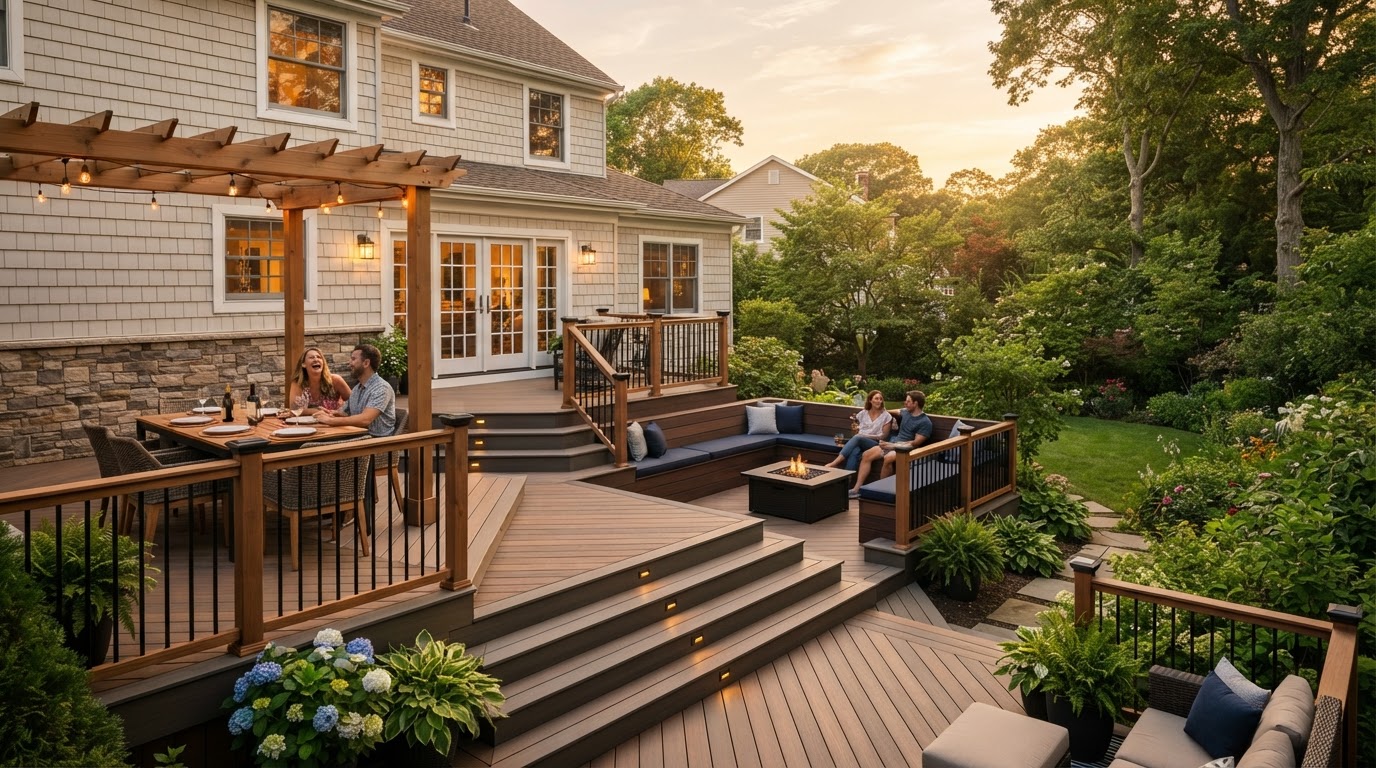
A backyard deck can do much more than add outdoor space to your Valley Stream home. The right design can create a comfortable place for family dinners, summer gatherings, morning coffee, or simply relaxing outdoors after a long day.
But building a deck on Long Island involves more than choosing a color and picking out decking boards. Your property's layout, drainage, stairs, railings, materials, maintenance needs, and applicable local requirements all need to be considered before construction begins.
For Valley Stream homeowners considering a new outdoor living space, working with an experienced local contractor can make the process easier from the initial idea through the final installation.
What Makes a Good Valley Stream Deck?
Every property is different. A deck that works well for one backyard may not be the right solution for another.
Before designing your deck, consider how you actually plan to use it. Do you want a large entertaining area for family and friends? A smaller space for outdoor dining? Room for a grill and seating? Or perhaps a multi-level design that connects different areas of your backyard?
A good deck design balances appearance with everyday function. It should complement your home's architecture while providing enough usable space for the activities you have in mind.
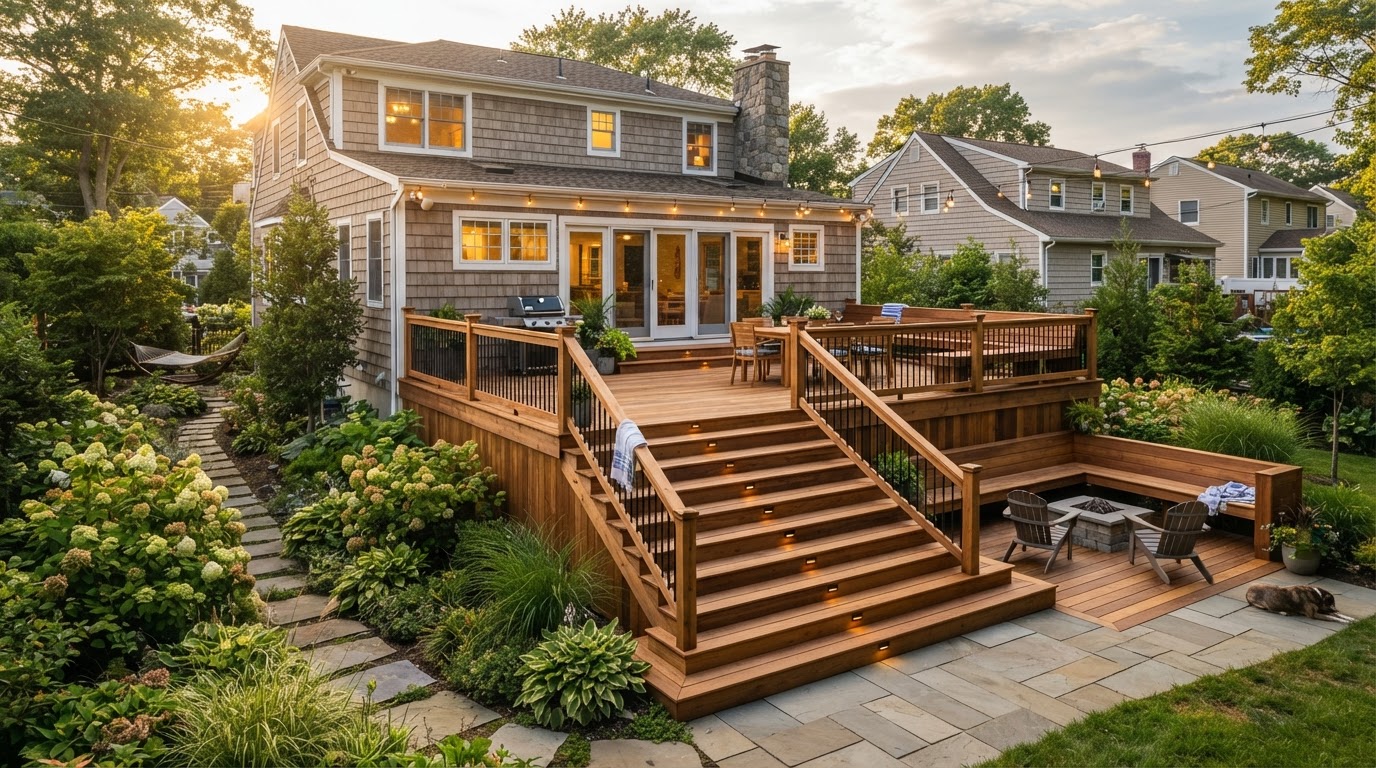
A site evaluation can also identify practical issues such as yard slope, drainage, access, existing landscaping, and the relationship between the deck and your home's entry points.
For homeowners looking for a dedicated local service, Dougy Construction's Custom Deck Builder in Valley Stream page provides a starting point for exploring custom deck options.
Choosing the Right Decking Material
Material selection is one of the most important decisions you'll make. Valley Stream experiences hot and humid summers, rain, snow, and significant seasonal temperature changes, so outdoor materials need to be selected with long-term use in mind.
Composite Decking
Composite decking is popular with homeowners who want a lower-maintenance outdoor surface. It is designed to resist common concerns associated with traditional wood decking, including moisture exposure, fading, and splintering.
It can also provide a consistent appearance without requiring the same level of regular staining and sealing associated with many wood products.
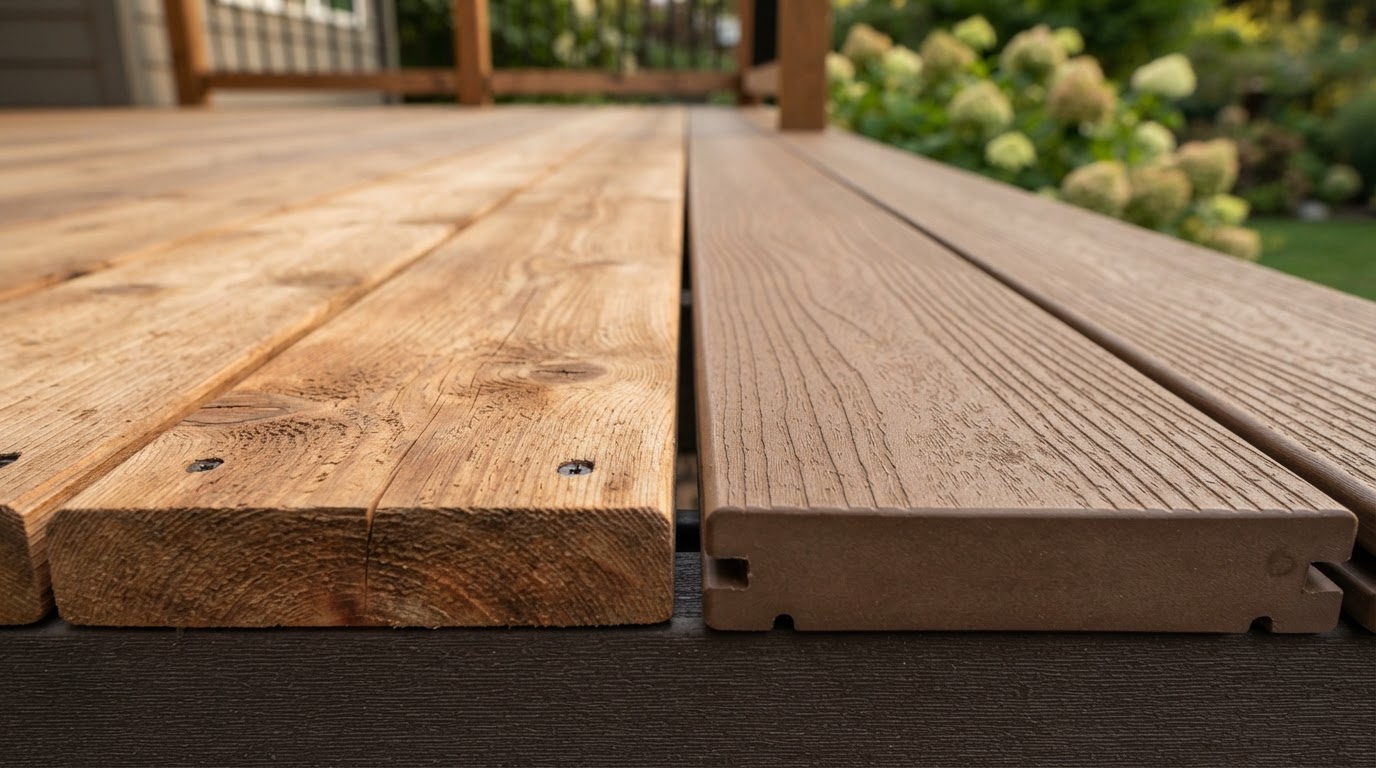
Natural Wood Decking
Wood remains an attractive option for homeowners who prefer a traditional appearance. Different wood species offer different levels of durability, appearance, and maintenance requirements.
The key is understanding that wood decking needs ongoing care. Cleaning, staining, and sealing can help protect the surface and maintain its appearance over time.
Rather than choosing a material solely because it looks good in a showroom, consider its expected maintenance, durability, appearance, budget, and how much time you want to spend caring for the deck.
Don't Overlook Deck Stairs and Railings
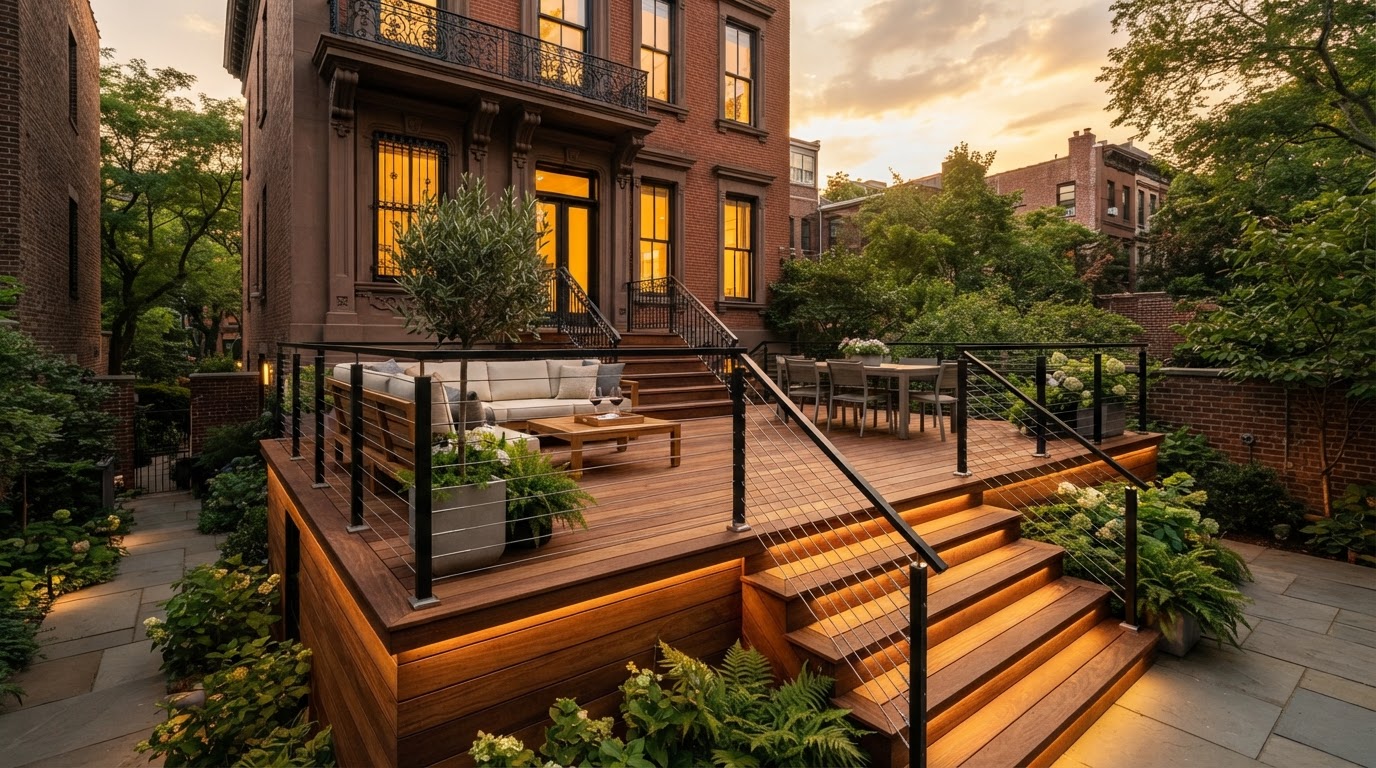
Stairs are one of the most important parts of a raised deck. They aren't simply a way to get from the deck to the yard. They need to be comfortable, stable, and properly integrated into the design.
A well-designed stair system should have consistent steps and appropriate handrails while working naturally with the shape and elevation of the deck.
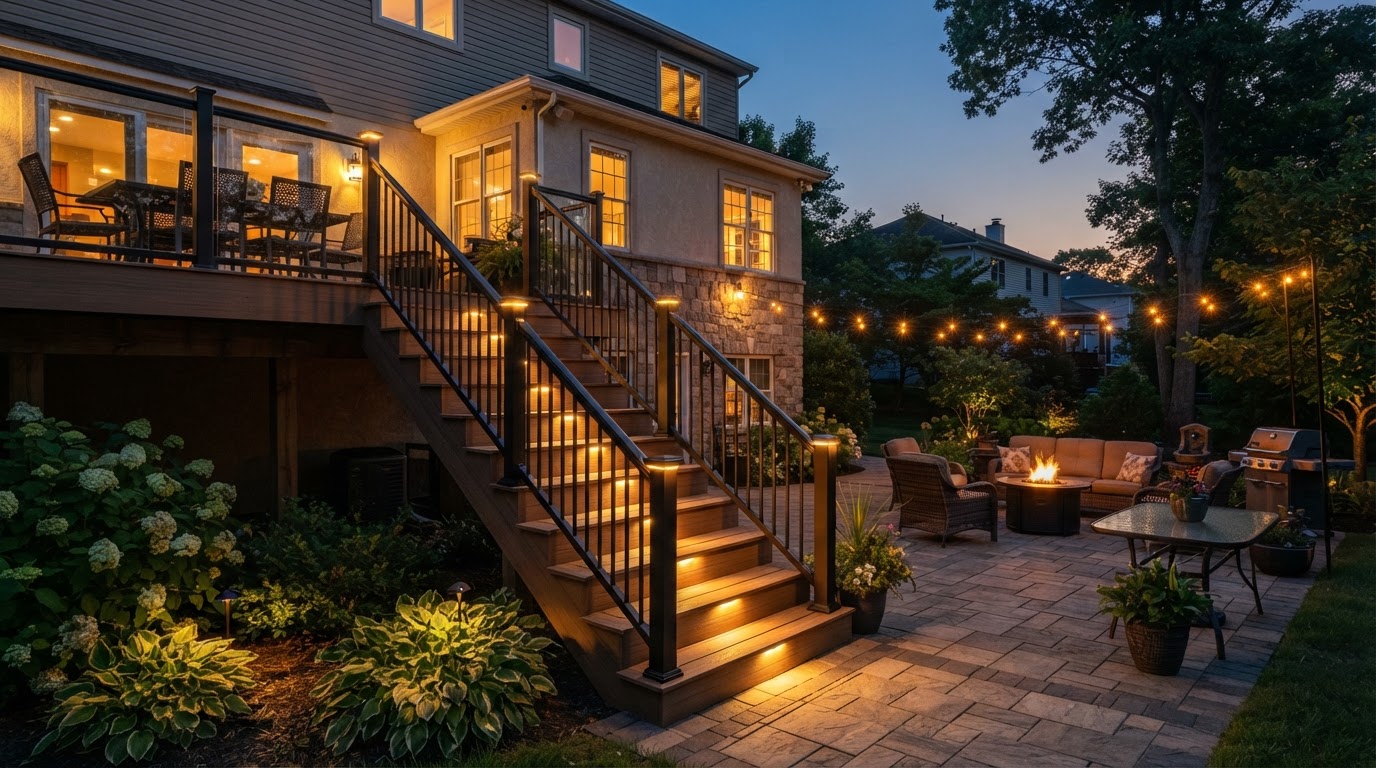
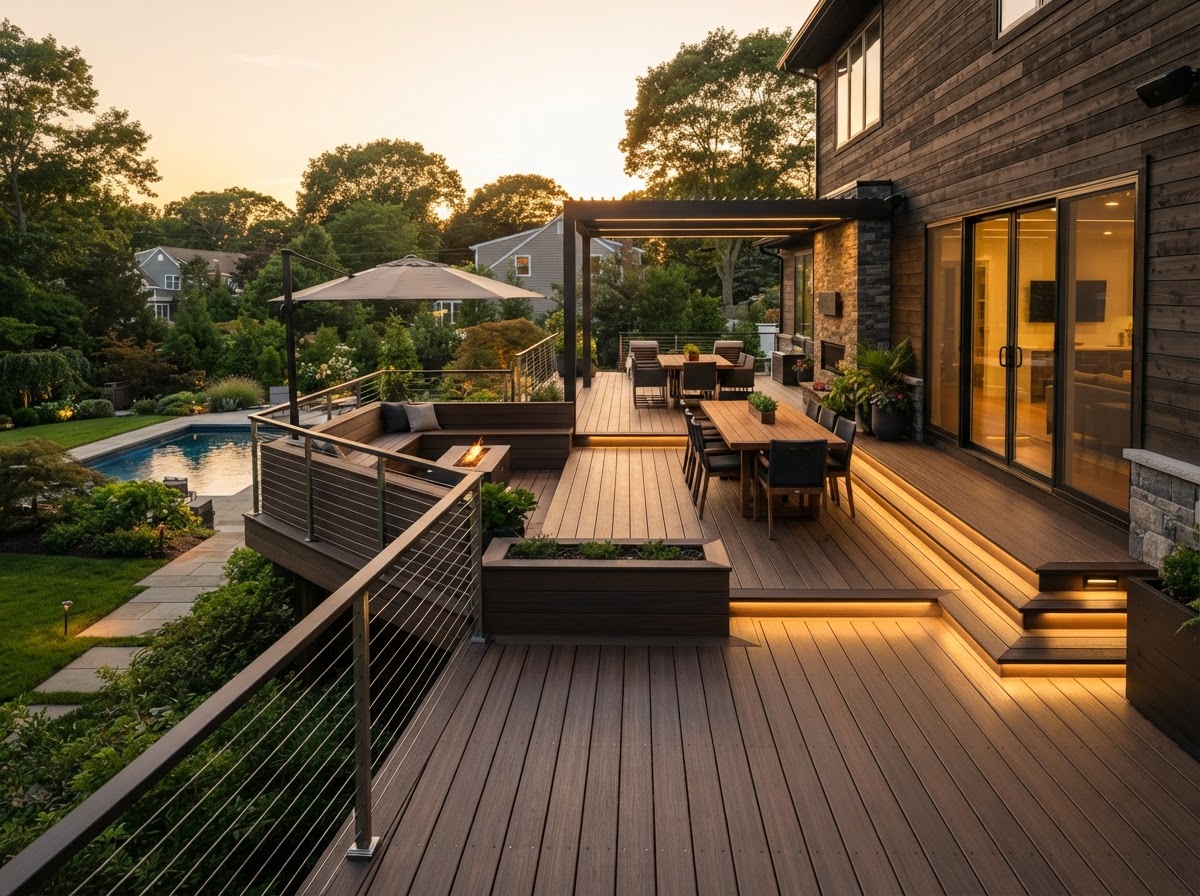
Railings are equally important. Besides providing an important safety function, they can significantly influence the overall appearance of the finished deck. Options can range from traditional designs to modern, low-maintenance systems.
Lighting can also improve the usability of stairs and pathways after sunset. Carefully positioned low-voltage lighting can provide visibility while adding another design element to the outdoor space.
Think About Drainage and the Existing Yard
One area homeowners sometimes overlook is water management.
Rainwater needs a suitable path away from the home and outdoor living area. Existing slopes, landscaping, soil conditions, and drainage patterns can all influence the design.
A professional site evaluation should consider how the proposed deck interacts with the rest of the property rather than treating the deck as an isolated structure.
This is particularly important when replacing an older deck or building on a property where water already collects in certain areas.
What About Permits and Local Requirements?
Deck construction can involve local building and zoning requirements, depending on the project's size, height, location, and design.
Valley Stream homeowners should determine which approvals apply to their specific property before construction begins. Requirements can also vary depending on the municipality and the characteristics of the project.
An experienced contractor can help identify the documentation and approvals that may be required and incorporate those considerations into the planning process. The important point is simple: don't wait until construction is underway to discover that your design needs to be changed.
A Better Way to Plan Your Deck
A successful project generally follows a logical process.
1. Start With Your Goals
Think about how you want to use the space. Make a list of the features that matter most, such as dining space, seating, stairs, privacy, lighting, or room for outdoor cooking.
2. Evaluate the Property
The contractor can assess the available space, grade, access, existing structures, landscaping, and other conditions that could affect the design.
3. Develop the Design
The layout can then be adjusted to fit your home and lifestyle. This is the stage where you can consider deck size, shape, materials, railing styles, stairs, and additional outdoor features.
4. Review Materials and Costs
Compare the available decking materials based on appearance, maintenance, durability, and budget. A clear scope of work also helps reduce misunderstandings later in the project.
5. Address Required Approvals
Before construction begins, determine which permits, inspections, or other local requirements apply to the project.
6. Build and Finish the Deck
Once planning and approvals are complete, construction can move forward. Proper framing, secure connections, quality decking installation, stair construction, and finishing details all contribute to the finished result.
Popular Custom Deck Features
Today's homeowners have plenty of options for creating a more functional outdoor living area. Depending on the property and budget, a custom deck may include:
- Built-in seating
- Custom stairs
- Decorative or privacy railings
- Integrated lighting
- Pergolas or shade structures
- Multiple deck levels
- Outdoor dining areas
- Space for grills and outdoor kitchens
- Connections to patios or landscaped areas
The goal isn't to add every possible feature. The best design is one that makes sense for your home and the way you actually use your backyard.
How to Choose a Valley Stream Deck Contractor
Choosing a contractor is just as important as choosing your decking material.
Look for a company that can clearly explain the construction process, material options, project scope, and applicable requirements. Ask to see examples of previous work and make sure you understand what is included in the proposal.
Communication matters, too. A good project should have clear expectations regarding design, materials, scheduling, costs, and changes. You can learn more about the company's broader construction services through Dougy Construction.
Frequently Asked Questions
How much does a custom deck cost in Valley Stream?
The cost depends on factors such as deck size, height, layout, materials, stairs, railings, site conditions, and additional features. The most reliable way to determine your project's cost is to have the property evaluated and receive a project-specific estimate.
Is composite decking better than wood?
Neither material is automatically right for every homeowner. Composite can appeal to people who prioritize lower maintenance, while wood may be preferred for its traditional appearance. Your budget, maintenance preferences, and desired look should all factor into the decision.
How long does deck construction take?
The timeline varies depending on the size and complexity of the project, material availability, weather, site conditions, and any required approvals. A contractor should provide a realistic schedule based on your specific project.
Can I add stairs and lighting to a custom deck?
Yes. Stairs, railings, and lighting can be incorporated into the design from the beginning. Planning these features early usually produces a more cohesive finished result.
Build a Backyard You'll Actually Use
A custom deck should be designed around your home, not around a one-size-fits-all template. The right combination of layout, materials, stairs, railings, and outdoor features can turn an underused backyard into a space you'll enjoy for years.
If you're considering a new deck in Valley Stream, start with a conversation about your property, goals, and budget. Ready to transform your backyard? Contact Dougy Construction to explore your custom deck project and take the first step toward creating a more functional outdoor living space. Or call us directly at (631) 839-6476 for a free, no-obligation estimate.
Ready to start your project?
Get a free estimate from Dougy Construction — NYC's trusted deck, fence, and renovation specialists.