Custom Deck Builder Long Island: Costs, Permits & Materials for 2026
Custom deck costs in Long Island & NYC for 2026: materials, permitting, and labor with Dougy Construction, 15+ years serving Valley Stream and greater NYC.
Custom deck costs in Long Island and NYC for 2026 depend on materials, permitting, and labor. Dougy Construction, with 15 years serving Valley Stream and greater NYC, builds code-compliant wood and composite decks under transparent, licensed, insured pricing for guaranteed quality results.
Custom deck building across Long Island and NYC in 2026 involves three cost drivers: material choice (wood versus composite), square footage, and municipal permit fees tied to project size and location. Dougy Construction, serving Nassau, Western Suffolk, Queens, Brooklyn, and Manhattan, brings 15+ years building code-compliant decks with transparent, itemized pricing for homeowners.
What Makes Deck Building Unique in Long Island and NYC?
Climate, density, and property layout separate deck construction on Long Island and in New York City from most other regions. Coastal exposure, narrow lots, rooftop access, and township-specific permitting all shape how a project gets designed and built. Homeowners from Nassau County to Queens face different structural and logistical questions than someone building in an open suburban lot elsewhere in the country.
Demand reflects that complexity. Long Island supports an established custom deck market, with builders across the region completing large volumes of projects over several decades. That track record signals a mature industry where homeowners expect precise engineering, weather-resistant materials, and designs suited to coastal wind and moisture conditions. Many property owners specifically search for a custom deck builder on Long Island when planning composite decking or custom deck construction. Local experience with regional soil, frost depth, and salt-air exposure matters more here than in inland markets.
Why does property type change the deck-building approach?
A backyard deck in Garden City or Rockville Centre faces different constraints than a rooftop terrace in Manhattan or a narrow Brooklyn lot in Park Slope. Ground-level decks need footing depth suited to local frost lines, while elevated or rooftop structures require load calculations tied to the building itself. Queens and Brooklyn projects often work around tighter access, limited staging space, and shared walls.
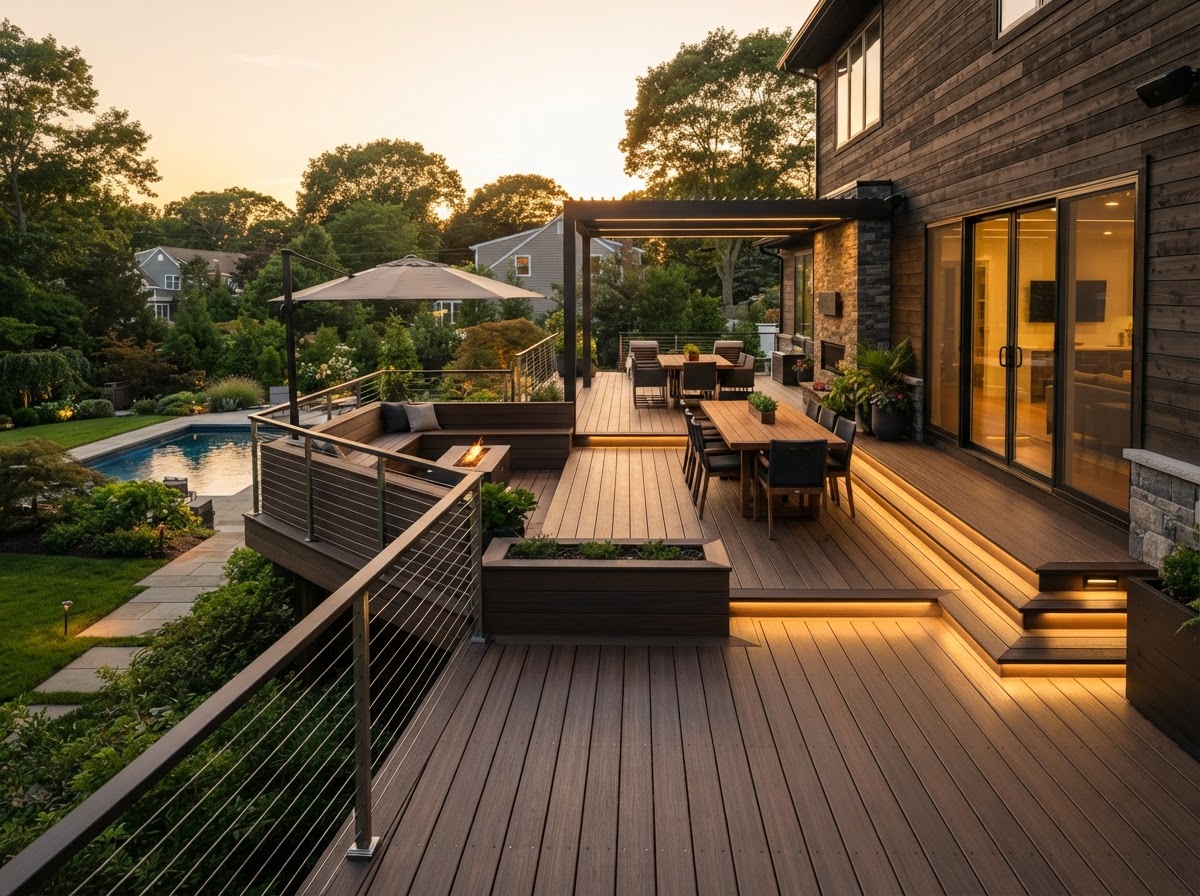
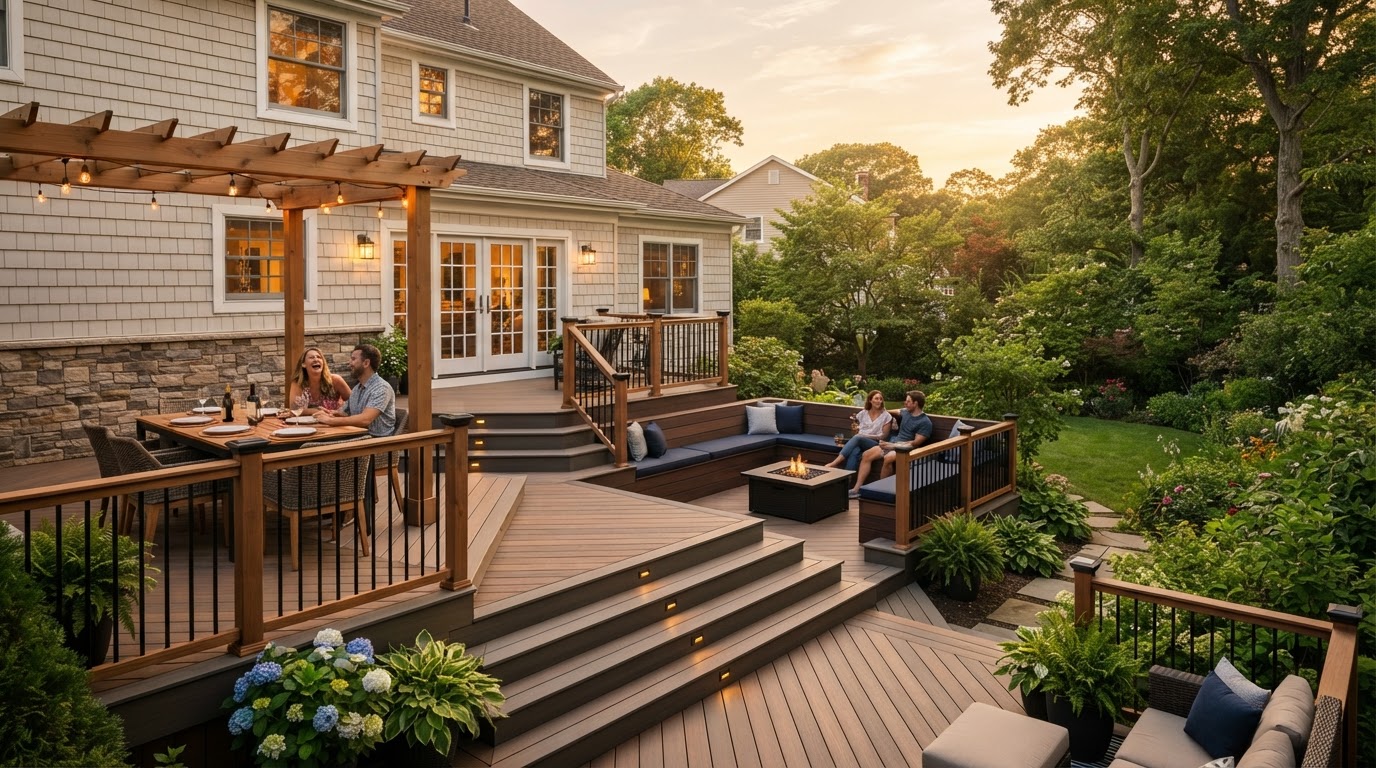
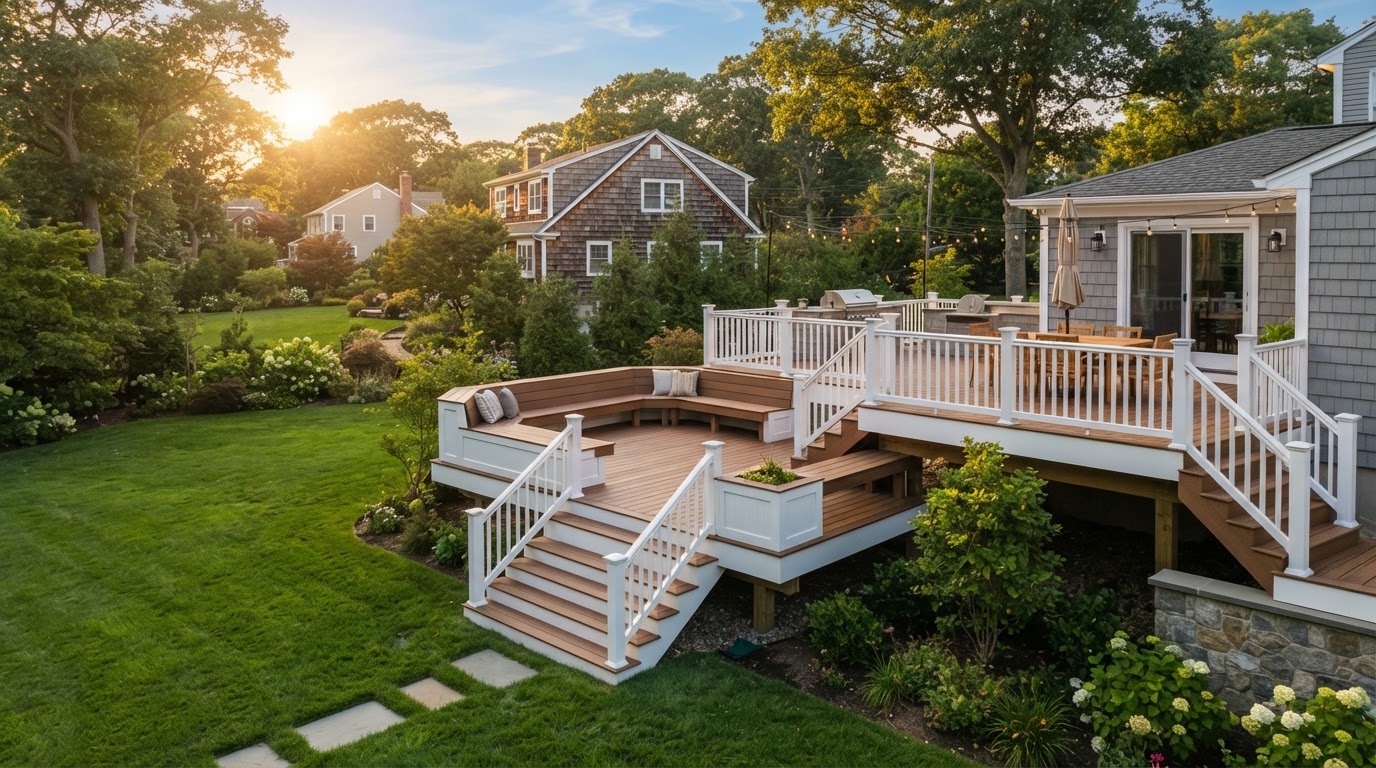
Custom decks in this market range widely in scope. Projects span compact platforms for small backyards in Astoria or Bayside, expansive multi-level decks with built-in seating for entertaining, structures incorporating railings and stairs to meet grade changes, and rooftop terrace decks designed around building load limits. Dougy Construction serves the greater New York City area, giving Long Island and NYC homeowners access to a contractor familiar with these regional variables rather than a one-size approach.
What Does a Long Island Deck Cost in 2026?
Total project cost for a Long Island deck depends on square footage, material choice, and site conditions across neighborhoods from Garden City to Bayside. Most homeowners budget for lumber, hardware, and labor, yet the permit fee often gets left off the list entirely. That oversight creates confidence problems later, when a township inspection stalls a project that looked fully priced on paper.
Permit costs vary widely depending on location and project scale, and Long Island townships are no exception. Fees differ across Nassau and Suffolk municipalities, and so does the paperwork required for approval. A clear understanding of Nassau County deck permit requirements before construction starts protects homeowners from costly delays and change orders mid-build.
How much does a Long Island deck permit cost?
Residential deck permit fees on Long Island differ by township and project footprint. Larger decks, elevated structures, and builds with railings or roofs often trigger higher fees and added inspection steps. Factoring this line item in from the start keeps a renovation budget realistic rather than reactive.
Material choice shapes the rest of the budget conversation. The debate over wood vs composite decking that NY homeowners weigh usually comes down to upfront cost versus long-term maintenance. Wood generally costs less upfront but needs staining and sealing, while composite costs more upfront but needs minimal upkeep and offers higher weather resistance.
Dougy Construction, a deck builder Long Island homeowners can rely on, uses quality materials paired with transparent pricing so clients understand true costs, permits included, before any work begins. That approach applies equally to a custom deck builder in Queens NY project on a rooftop terrace or a backyard build in Rockville Centre, giving every client a clear, honest picture of the cost to build a deck Long Island properties typically require.

Wood or Composite Decking: Which Fits NY Homes?
Material choice determines how a deck performs through Long Island winters and New York City summers alike. Homeowners in Nassau, western Suffolk, and the five boroughs weigh upfront cost against long-term upkeep when comparing wood vs composite decking NY options. Local builders offer handcrafted wood and composite decking, each suited to different budgets, maintenance preferences, and lifestyle needs.
Pressure-treated and cedar wood decks remain popular across Garden City, Rockville Centre, and Bay Ridge for their natural look and lower installation cost. Composite decking and PVC materials have become a specialized category within the regional decking industry since the mid-1990s, offering resistance to rot, splintering, and moisture damage. That matters on Long Island, where salt air near Long Beach and humid NYC summers accelerate wear on untreated lumber.
Which material lasts longer on a Long Island or NYC deck?
Composite boards typically outlast wood decking because they resist moisture absorption and insect damage better than natural lumber. Wood decks require periodic staining and sealing to prevent warping, especially on exposed rooftop terraces in Manhattan or waterfront properties in Long Beach. Composite options reduce that maintenance cycle but carry a higher initial material cost.
Every deck project should be backed by quality materials, skilled craftsmanship, and honest pricing, regardless of which material a homeowner selects. For a rooftop deck in Queens or a backyard platform in Astoria, the right choice often comes down to how much maintenance a household wants to manage versus how much it can spend at installation. A qualified deck builder Long Island homeowners trust should walk through both options before any contract gets signed.
What Permits Do Nassau County Decks Require?
Nassau County requires a building permit for any deck attached to the home, any deck raised more than 30 inches above grade, decks exceeding a set footprint, and decks that include a roof, screening, or a hot tub. These Nassau County deck permit requirements mirror the standards applied across Long Island townships, from Garden City to Long Beach to Rockville Centre. Homeowners in Queens neighborhoods like Astoria, Bayside, and Forest Hills, along with Brooklyn properties in Park Slope and Bay Ridge, face comparable rules enforced by New York City's Department of Buildings.
Skipping this step carries real risk. A deck built without approval can trigger fines, stop-work orders, and complications when the property goes to sale. Buyers' attorneys routinely flag unpermitted structures during due diligence.
How many decks actually need a permit?
Nearly all of them do. Roughly 95% of real decks built on Long Island require a permit, making approval the standard expectation rather than a rare formality. Treating permitting as optional almost always backfires once a township inspector or a future buyer's inspector gets involved.
What does a permit application typically include?
Applications generally call for a stamped survey, a framing plan, and footing detail showing how the structure anchors to the ground. Inspectors then check the project at several stages, starting with footings, moving through framing, and finishing with a final sign-off before the deck is cleared for use.
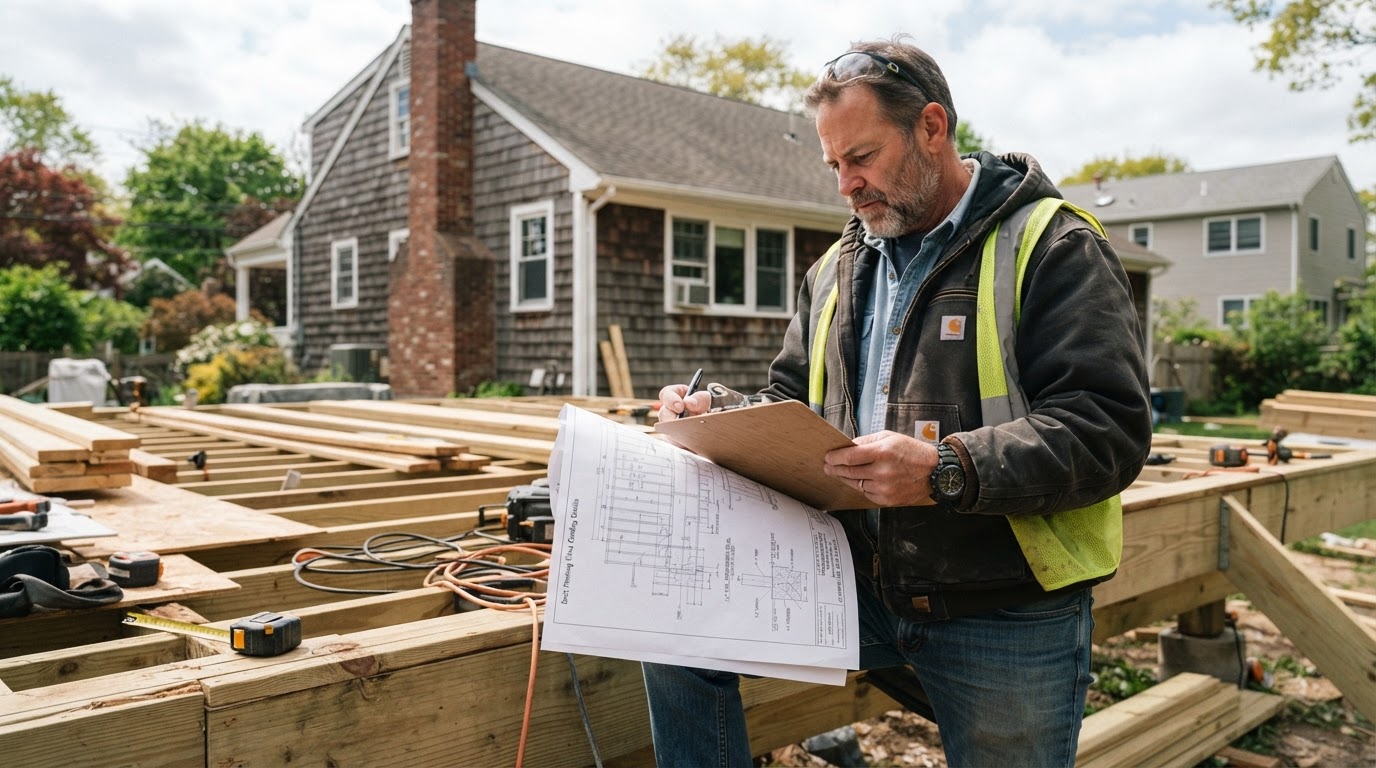
A reputable deck builder Long Island homeowners trust handles this paperwork directly. Township requirements shift depending on footprint, height, and attachment method. For a Manhattan rooftop terrace deck or a backyard project in Hempstead, matching the plan to local code before construction begins avoids costly rework later. Dougy Construction, serving Nassau County and the broader New York City area, manages permitting as a standard part of every custom deck project.
How Do Permit Rules Vary Across Townships?
Permit requirements shift from one Long Island township to the next, with separate fee schedules, separate timelines, and separate inspection checklists at each municipal building department. A homeowner in Nassau County faces a different review process than a property owner in western Suffolk. Even neighboring towns rarely share identical paperwork. Anyone researching Nassau County deck permit requirements before hiring a deck builder Long Island homeowners trust should expect this patchwork rather than a single uniform rulebook.
That variation becomes clearer with direct experience. Permit guidance built on roughly two decades of filing applications across Suffolk and Nassau counties shows a consistent pattern: most townships move at a comparable pace once paperwork is complete. Typical processing runs about two to four weeks after submission, provided the application includes a stamped survey, a framing plan, and a footing detail.
Inspections follow a similarly familiar sequence almost everywhere on the Island.
What inspections should homeowners expect during a deck build?
Township inspectors generally check three stages: the footings, the framing, and a final review before sign-off. Some townships schedule these visits faster than others, which affects how quickly a deck moves from framed structure to finished outdoor space. Property owners in Garden City, Rockville Centre, or Long Beach should confirm sequencing with their building department before work begins.
Does every township review decks the same way?
No single process covers the whole region. Differences in fee amounts, review timelines, and inspection scheduling mean two nearby towns can process the same deck design very differently. A renovation partner that manages every trade on the job, rather than just carpentry, keeps these moving pieces aligned. Coordinating surveys, framing plans, and inspection scheduling across varying township rules is where an experienced renovation contractor earns its value, ensuring the finished deck meets local code from footing to final walkthrough.
How Should You Choose a Deck Builder Nearby?
Credentials and communication separate a dependable deck builder Long Island from one that leaves a project half-finished. Homeowners in Nassau, western Suffolk, and across the five boroughs should weigh licensing, insurance, and track record before signing anything. Skipping this step risks fines, unfinished work, and disputes that drag on for months.
What should a homeowner verify before hiring?
A licensed and insured contractor reduces risk because coverage protects the property if an accident happens mid-project. Crews that treat a job site with respect, keeping lumber stacked and debris cleared daily, signal the same discipline that shows up in the finished structure. Homeowners from Long Beach to Bay Ridge should ask directly whether coverage is current and request documentation, not just a verbal assurance.
Does communication matter more than price?
Timelines slip when a contractor overpromises and underdelivers. A builder who sets a realistic schedule and sticks to it, whether the job sits in Forest Hills or Rockville Centre, prevents the frustration of a deck that sits half-built through a rainy season. Clear updates during permitting, material delivery, and construction matter as much as the quote itself.
Referral patterns also reveal reliability. Much of a trustworthy contractor's workload comes from past clients sending neighbors and family members, a sign that satisfaction holds up after the crew leaves. Before hiring, homeowners should ask: Can the contractor provide proof of licensing and insurance on request? Does the estimate include a written timeline with milestones? How much of the business comes from repeat or referred clients? Will the same crew handle permitting, framing, and finish work, or are trades subcontracted separately?
Dougy Construction works from this standard, traveling from its Valley Stream, NY base to serve homeowners across Queens, Garden City, and the broader New York City area with the same level of accountability on every job site.
What Design Features Add Real Value to Decks?
Railings, stairs, and built-in seating separate a basic platform from a true outdoor living space. These features turn a wood or composite surface into a functional extension of the home, whether the setting is a backyard in Garden City or a rooftop terrace in Manhattan. A deck builder Long Island homeowners trust will design around daily use, not just square footage.
Built-in benches solve a real problem on narrow Queens and Brooklyn lots: furniture eats space that multi-level stairs and bench seating can reclaim. Railings do more than meet code. Horizontal cable rail, composite balusters, and framed glass panels all change how a deck reads from the yard and from inside the house. Stairs connecting multiple levels work especially well on sloped properties across Nassau and western Suffolk, where a single flat platform wastes usable grade.
Does a bigger deck always mean a better investment?
Size matters less than layout. A compact deck in Forest Hills with a defined dining zone, a shaded seating nook, and a code-compliant railing often delivers more daily value than a larger, undivided platform. Builders who have completed large volumes of custom deck projects across Long Island consistently report that zoned layouts get used more than oversized open ones.
What should homeowners look for when comparing deck design proposals?
A proposal should account for how the space gets used, not just its dimensions. Review these elements before approving any plan: railing style and material (wood, composite, cable, or glass), stair placement relative to yard grade and entry points, built-in seating or storage integrated into the structure, and multi-level transitions for sloped or tiered properties. A contractor with 15 or more years focused on custom decks and full renovations brings a track record worth evaluating against these criteria.
Why Trust Dougy Construction With Your Deck?
Trust comes from a visible track record of honest pricing and skilled craftsmanship. With 15+ years of experience and 500+ completed projects, Dougy Construction is a licensed and insured contractor based in Valley Stream, NY, serving Nassau, western Suffolk, Queens, Brooklyn, and Manhattan. Every custom deck is built to local code, backed by a workmanship guarantee, and priced transparently with permits included from the start.
Make the Right Choice for Your Bathroom Renovation
In closing, building a custom deck in Long Island and the NYC area requires careful planning around materials, costs, and local permitting, but the investment pays dividends in home value and outdoor living enjoyment. Working with a licensed, insured contractor who communicates clearly, respects your timeline, and guarantees quality workmanship transforms the entire experience from stressful to straightforward. Your deck becomes more than a structure. It becomes a trusted addition to your home, built to code and designed to last.
Ready to start your custom deck project? Contact Dougy Construction today for a free, no-obligation estimate, or call us directly at 631-839-6476. We serve Valley Stream, Long Island, and the greater NYC area with honest pricing and craftsmanship you can count on.
Ready to start your project?
Get a free estimate from Dougy Construction — NYC's trusted deck, fence, and renovation specialists.