What Does It Cost to Build a Deck in Nassau County, NY?
Planning Nassau County decks? Understand material choices, installation cost factors, permits, and project planning before requesting a custom deck estimate.
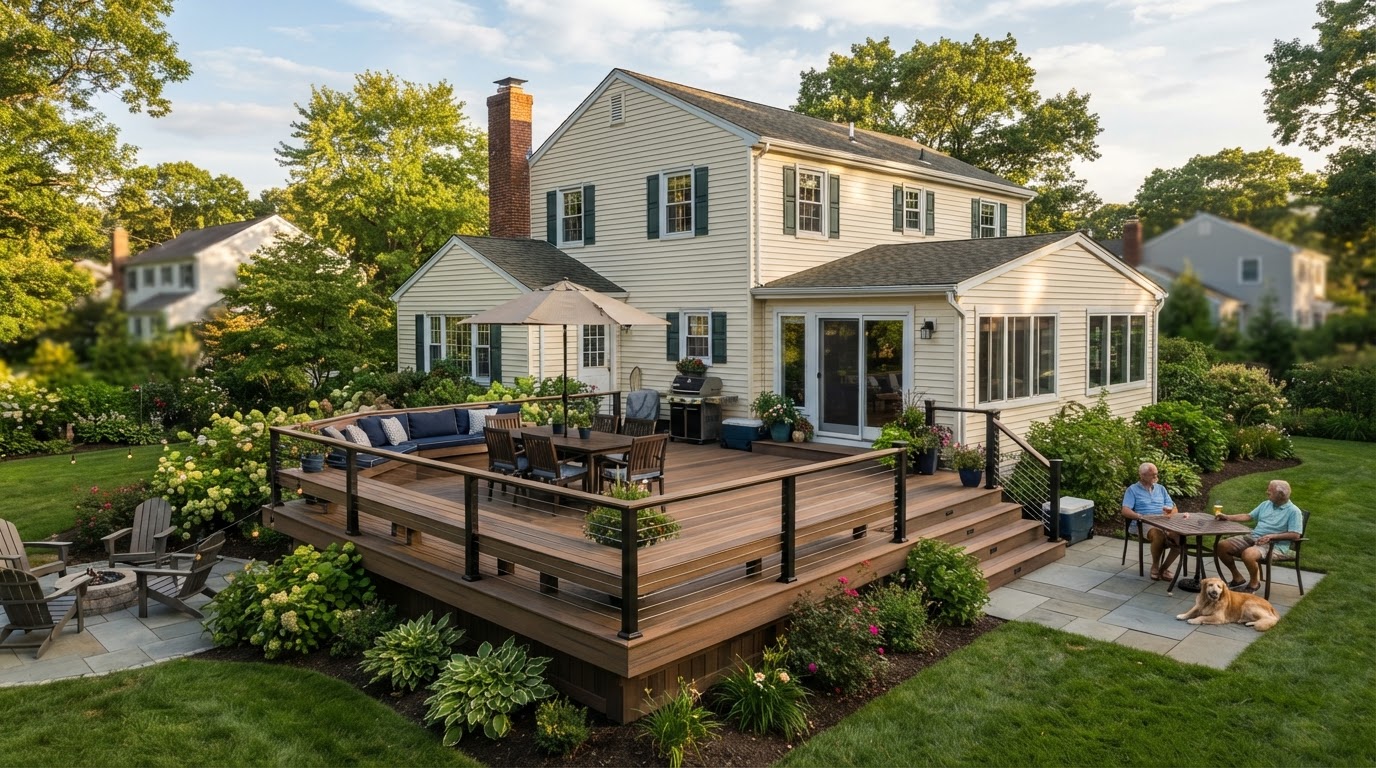
If you own a home in Nassau County, you have probably pictured it more than once: a deck out back where morning coffee tastes a little better, where the kids can run in and out without tracking mud through the kitchen, and where a summer barbecue can stretch into the kind of evening you do not want to end. Then the question that stops most homeowners in their tracks comes up. What does it actually cost to build a deck here?
Nassau County decks can range widely in price, and the final number depends on decisions you make about size, height, materials, site conditions, and the features you add. Two backyards that look similar from the street can produce very different estimates once a builder actually walks the property and measures it. This guide breaks down what drives the cost of building a deck in Nassau County, what to expect across common material options, how permits and site conditions affect the budget, and how to plan your project with confidence.
What Determines the Cost of a Deck in Nassau County?
There is no single price for a deck, and any contractor who gives you one over the phone without seeing your property is guessing. A realistic estimate starts with the specifics of your yard and the choices you make about the build. These are the factors that move the number the most.
Deck Size and Layout
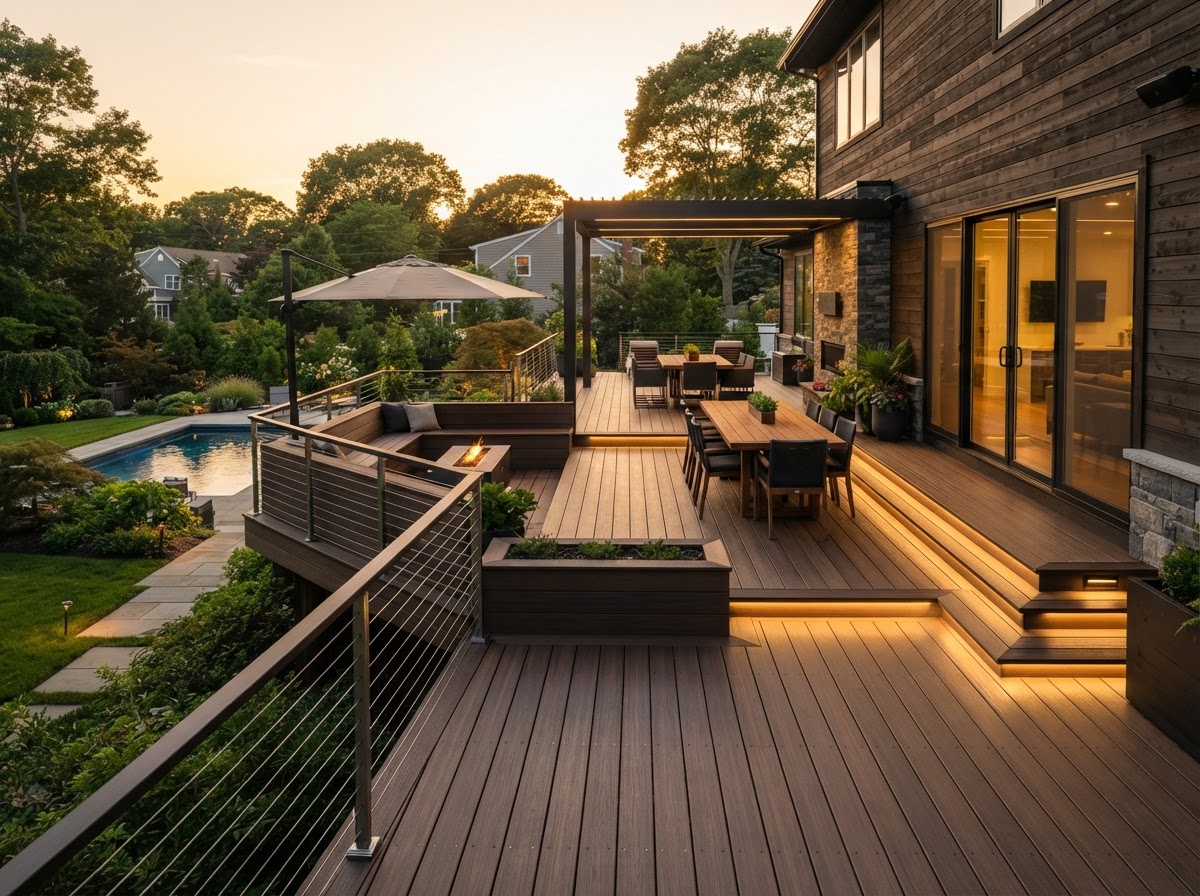
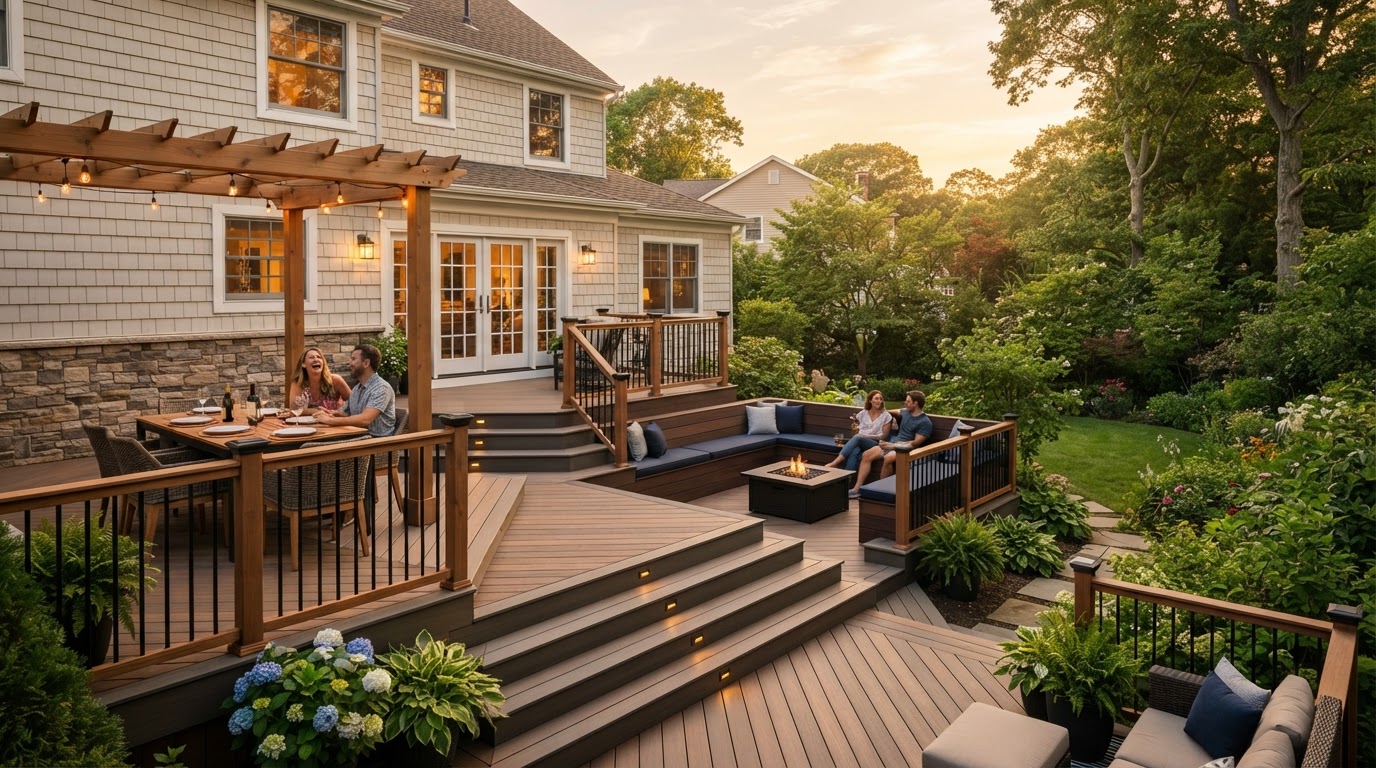
Bigger decks need more materials and more hours of work, so size is usually the biggest factor in the total. But shape matters too. A simple rectangular platform costs less per square foot than a deck with curves, angles, or a wraparound design. A multi-level deck that follows the slope of your yard requires more framing, more footings, and more labor than a flat, square platform of the same square footage. Before you start sketching, think about how you really want to use the space, dinner for two, birthday parties, a spot for the kids, and build the right size, not just the biggest one.
Decking Materials
The material you walk on is the single biggest cost driver, and it is also the decision that most affects how much upkeep you will face for the next decade. Nassau County homeowners typically choose between pressure-treated lumber, cedar, and composite decking, each with a different balance of upfront price, maintenance, and lifespan. We cover those trade-offs in detail in the next section.
Height and Structural Requirements
A ground-level deck and an elevated deck are very different projects. A raised deck needs taller posts, more substantial framing, and code-compliant railings and stairs. The higher the deck, the more structural work is involved, and that work is reflected in the estimate. If your home has a walkout basement or a raised first floor, the deck may need to be elevated to meet the entry door, which adds to the cost.
Railings, Stairs, and Custom Features
Railings and stairs are often underestimated in both cost and importance. Railings need to meet local building code for height and spacing, and stairs need proper riser height, tread depth, and non-slip surfacing. A simple pressure-treated railing costs less than cable rail, composite balusters, or framed glass panels. Built-in benches, pergolas, privacy screens, and integrated lighting each add to the bottom line, but they are also what makes a deck feel custom rather than off-the-shelf.
Site Preparation and Accessibility
A flat, easily accessible backyard is a straightforward build. A sloped lot, a yard with mature trees to work around, difficult equipment access, or a deck that needs to sit high off the ground all add labor and structural requirements. Demolition and disposal of an existing deck or structure also factor in if you are replacing rather than building new.
Comparing Deck Installation Costs and Long-Term Value
It helps to look past the sticker price of the boards. A cheaper deck that needs constant upkeep can cost more over time than one that is pricier up front. The right comparison weighs installation, maintenance, repairs, and how long the material is expected to last.
Pressure-Treated Lumber
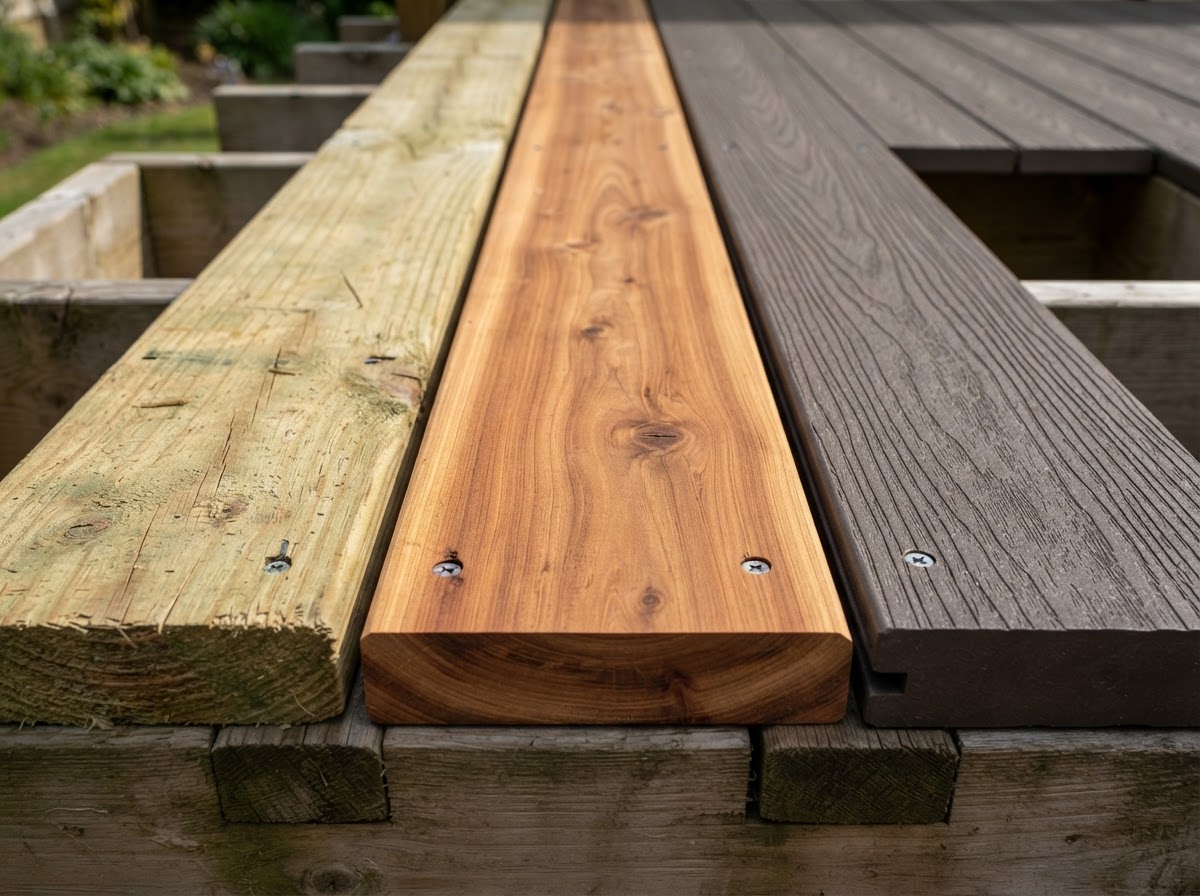
Pressure-treated lumber is the most budget-friendly decking material and the most common starting point for Long Island decks. It is treated to resist rot and insects, and it can be stained to match a range of styles. The trade-off is maintenance. It needs periodic cleaning, staining, and sealing to hold up against the humidity, rain, and freeze-thaw cycles that define a Nassau County winter. Without that care, boards can fade, split, and warp over time.
Cedar Decking
Cedar offers a warm, natural appearance and a distinctive grain that many homeowners love. It resists insects and decay naturally, which makes it a popular mid-range option. Cedar still requires maintenance to hold its color and integrity, and it tends to cost more than pressure-treated pine. For homeowners who want the look of real wood and are willing to invest in upkeep, cedar ages gracefully when it is cared for.
Composite Decking
Composite decking is made from a blend of wood fibers and plastic, and it has become the go-to choice for homeowners who want the look of wood without the annual maintenance. It resists rotting, fading, and splintering, and it needs only occasional cleaning with soap and water. The trade-off is a higher upfront material cost. Over the long term, many Nassau County homeowners find that the reduced maintenance pays for itself, especially given the constant weather exposure on Long Island.
Do You Need a Permit to Build a Deck in Nassau County?
Most attached or elevated decks require a building permit, and permit requirements in Nassau County vary by municipality. The building department that has jurisdiction over your property, your town, village, or city, makes the final call on what is required.
Permitting is not a formality. It is the process that confirms your deck is designed to meet local structural and safety standards, and skipping it can create real problems down the road, from fines and stop-work orders to complications when you sell your home. A complete permit application generally includes scaled drawings showing the deck dimensions, footing locations, framing details, railing heights, and stair layout. Inspections are then scheduled at key stages, typically footing inspections before concrete is poured, framing inspections once the structural elements are in place, and a final inspection before the deck is cleared for use.
Before construction begins, confirm the requirements with your local building department. You can review building and zoning permit information through Nassau County's official Building and Zoning Permits resource, and a reliable nassau county deck builder handles this paperwork as part of the project. If a contractor tells you a permit is unnecessary before they have seen your yard and reviewed the scope, that is a red flag.
How Custom Deck Construction Works
Custom deck construction in Nassau County follows a clear sequence. Understanding the stages helps you read an estimate with confidence and avoid surprises once construction begins.
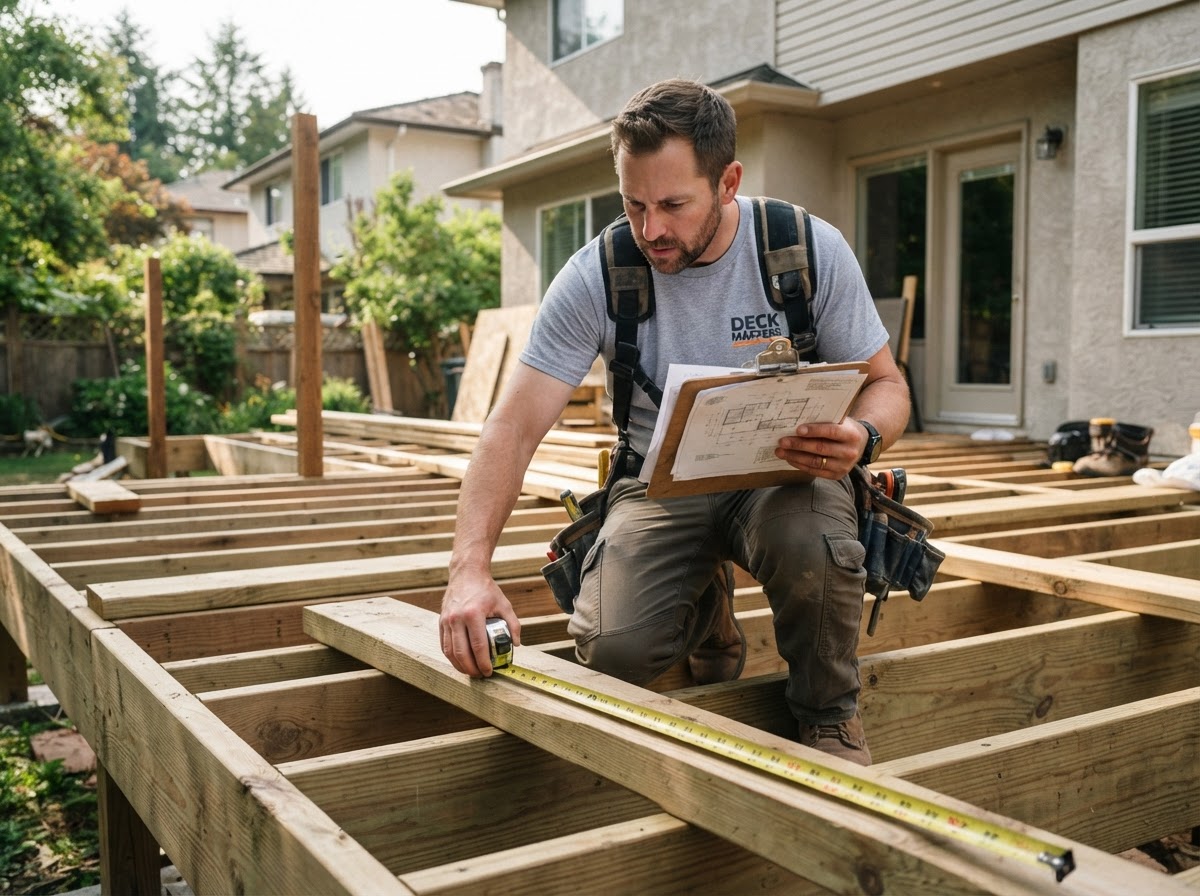
First, a builder visits your property to measure the yard, review the grade and drainage, and discuss how you want to use the space. From there, they recommend a size, layout, and material, and confirm which permits and inspections apply to your municipality. Once the design and permit are in place, the crew handles site preparation, demolition of any existing structure, and excavation for footings. Framing and structural work come next, followed by decking boards, railings, stairs, and any built-in features. The project closes with a final inspection and a walkthrough of the finished deck.
Project-Planning Checklist for Nassau County Homeowners
A little preparation makes your estimate clearer and your project easier to compare. Use this checklist before you request a quote.
- **Approximate deck dimensions:** A rough length and width, even from a tape measure, gives a builder a starting point.
- **Intended use:** Dining, lounging, kids, pets, or a combination, this shapes the layout.
- **Preferred decking material:** Pressure-treated lumber, cedar, or composite, or ask for a recommendation.
- **Railings and stairs:** Note whether the deck will be elevated and need code-compliant railings.
- **Optional features:** Built-in seating, planters, lighting, or a pergola.
- **Property grading and drainage:** Flag any slopes, standing water, or mature trees near the build area.
- **Permit requirements:** Confirm what your town, village, or city building department requires.
- **Preliminary budget:** A comfortable range, even a rough one, helps a builder shape the plan.
- **Written contractor estimates:** Itemized quotes you can compare scope against, not just totals.
- **Project schedule:** Any deadlines, like a family event or a seasonal target.
Maintaining Your New Deck
A deck is an investment that lasts longer when it is cared for. Pressure-treated lumber and cedar need periodic cleaning, staining, and sealing to stand up to Nassau County's humidity, rain, and freeze-thaw cycles. Composite decking needs far less, usually just occasional cleaning with soap and water, but it still benefits from keeping the surface clear of debris and checking that drainage flows away from the framing.
Good ventilation underneath, clearing leaves from between boards, and resealing wood on a regular schedule all extend the life of the deck. Ask your builder for the specific maintenance steps recommended for the material you choose, and follow them so the finished deck holds up for years.
Frequently Asked Questions About Nassau County Decks
How much does it cost to build a deck in Nassau County?
The cost depends on size, materials, height, site conditions, and the features you add. Pressure-treated lumber is the most budget-friendly option, while composite costs more upfront but requires less maintenance. The most accurate figure comes from a detailed, on-site estimate rather than a generic per-square-foot number.
What is the best decking material for a Nassau County home?
There is no single best material, only the right fit for your budget and maintenance preferences. Pressure-treated lumber offers the lowest upfront cost with more upkeep, cedar gives a natural wood look with moderate maintenance, and composite delivers low maintenance at a higher initial price. A builder can walk your yard and recommend the best option for how you live.
Do I need a building permit for a deck in Nassau County?
Most attached or elevated decks require a building permit, and requirements vary by municipality. Confirm what your town, village, or city building department requires before construction begins, or ask your contractor to verify and handle the permitting as part of the project.
How long does custom deck construction take?
Construction time depends on the size and complexity of the deck, material availability, weather, and the permit and inspection schedule. A straightforward deck may take a shorter window of active construction, while a larger or more complex project can take longer. Ask your builder for a realistic timeline based on your specific project.
How can I get an accurate deck installation estimate?
Request an on-site visit rather than relying on a phone quote. A qualified builder will walk your property, take measurements, discuss your goals and material preferences, and provide an itemized breakdown you can compare against other quotes.
Plan Your Nassau County Deck Project with Dougy Construction
Ready to plan your new deck? Contact Dougy Construction to discuss your design, material options, and installation requirements. Request a free, no-obligation estimate and we will walk your yard, listen to what you want, and put together a clear, itemized proposal.
For more planning guidance, explore our custom deck installation services or review our complete Custom Deck Building Guide. No pressure, no obligation, just honest advice and transparent pricing from your local Nassau County deck team.
📞 Call **[631-839-6476](tel:6318396476)** · 13 E Maple St, Valley Stream, NY 11580
Ready to start your project?
Get a free estimate from Dougy Construction — NYC's trusted deck, fence, and renovation specialists.