Choose a Nassau County Deck Builder: 7 Steps | Dougy Construction
Choosing a deck builder on Long Island? Follow 7 steps covering costs, permits, materials, licensing, and the questions to ask before you sign.
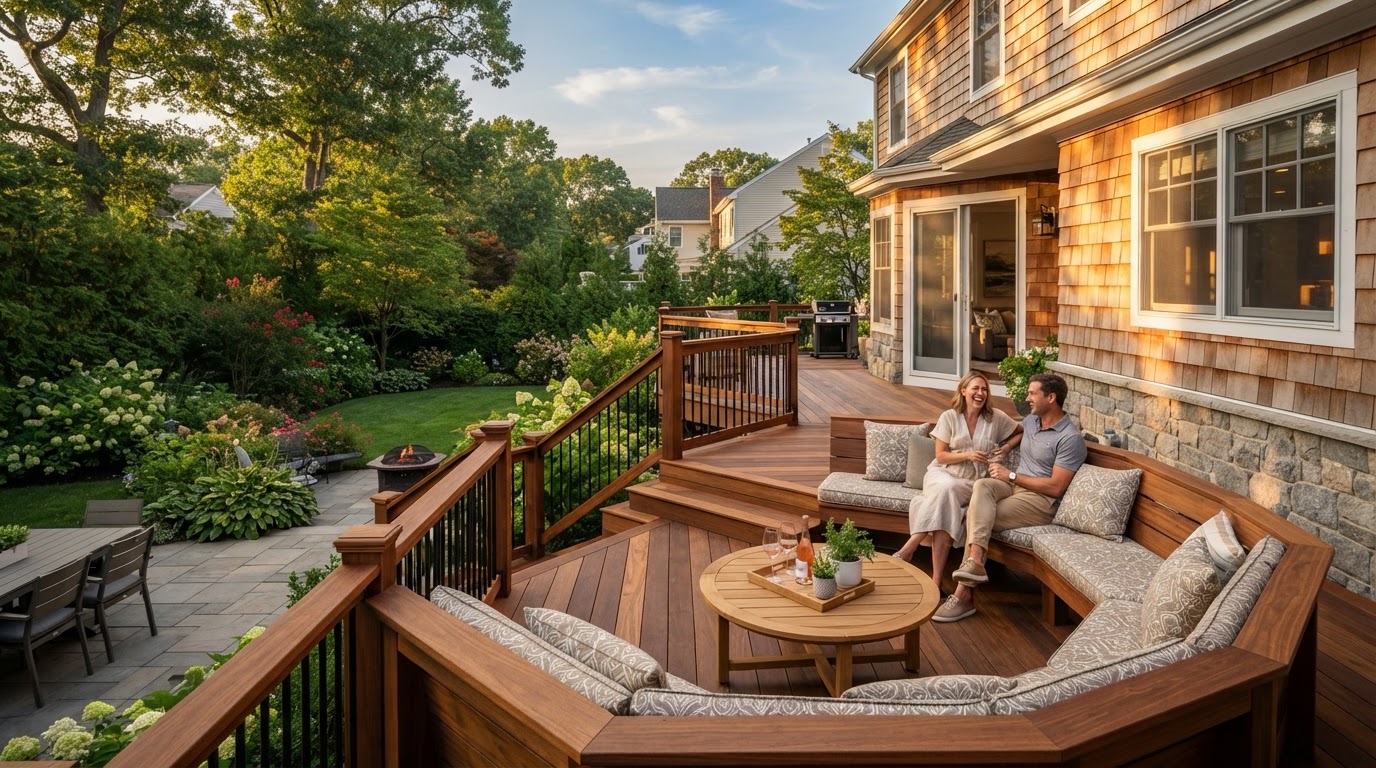
Home improvement shows make a deck look like a weekend project: a few boards, a montage, and a finished backyard by the next commercial. Real life on Long Island is different. There are permits to pull, footings to set below the frost line, salty air to plan around, and plenty of contractors who all say they're the best.
A well-built deck adds usable space and makes your home more appealing to buyers. A poorly built one becomes a safety problem. This guide walks you through seven steps for choosing a deck builder near you, with Nassau County costs, permits, and materials built in, so you know what to ask before you sign anything. We're Dougy Construction in Valley Stream, so you'll hear our perspective, but these steps work for any builder you're considering.
Step 1: Set a Realistic Budget
There's no single price, which is why builders talk in cost per square foot. One Long Island cost guide puts installed decks at roughly $25 to $52 per square foot, with pressure-treated pine at the low end and composite at the top. Broader 2026 national guides run wider, about $30 to $75 per square foot installed once you add premium materials, height, or extra features. For a 16-by-20-foot deck, that's roughly $9,600 to $24,000. Treat that as a planning range, not a quote.
The boards you see are only part of the bill. The framing, footings, ledger, hardware, railing, and stairs underneath carry much of the cost. Multi-level designs, built-in seating, lighting, and tricky yard access add to it.
A deck usually returns part of its cost at resale, not all of it. The real payoff is living on it. Your actual number comes from an on-site visit and an itemized estimate, so a builder who quotes a lump sum without a visit deserves a follow-up question.
Step 2: Learn the Permit Basics
Nassau County doesn't issue your deck permit directly. The Town of Hempstead, Town of North Hempstead, Town of Oyster Bay, and incorporated villages each run their own building departments. In a village like Valley Stream, the village may handle it instead of the town.
A deck often needs a permit. For example, the Village of Hempstead's published guidance says attached decks need a permit even under 30 inches off the ground, and so do higher decks, covered decks, and those over 300 square feet. Applications typically include a survey showing the deck's location plus framing plans with footings, ledger attachment, stairs, and railings. Footings must reach below the frost line, and your plans will list the depth your town requires.
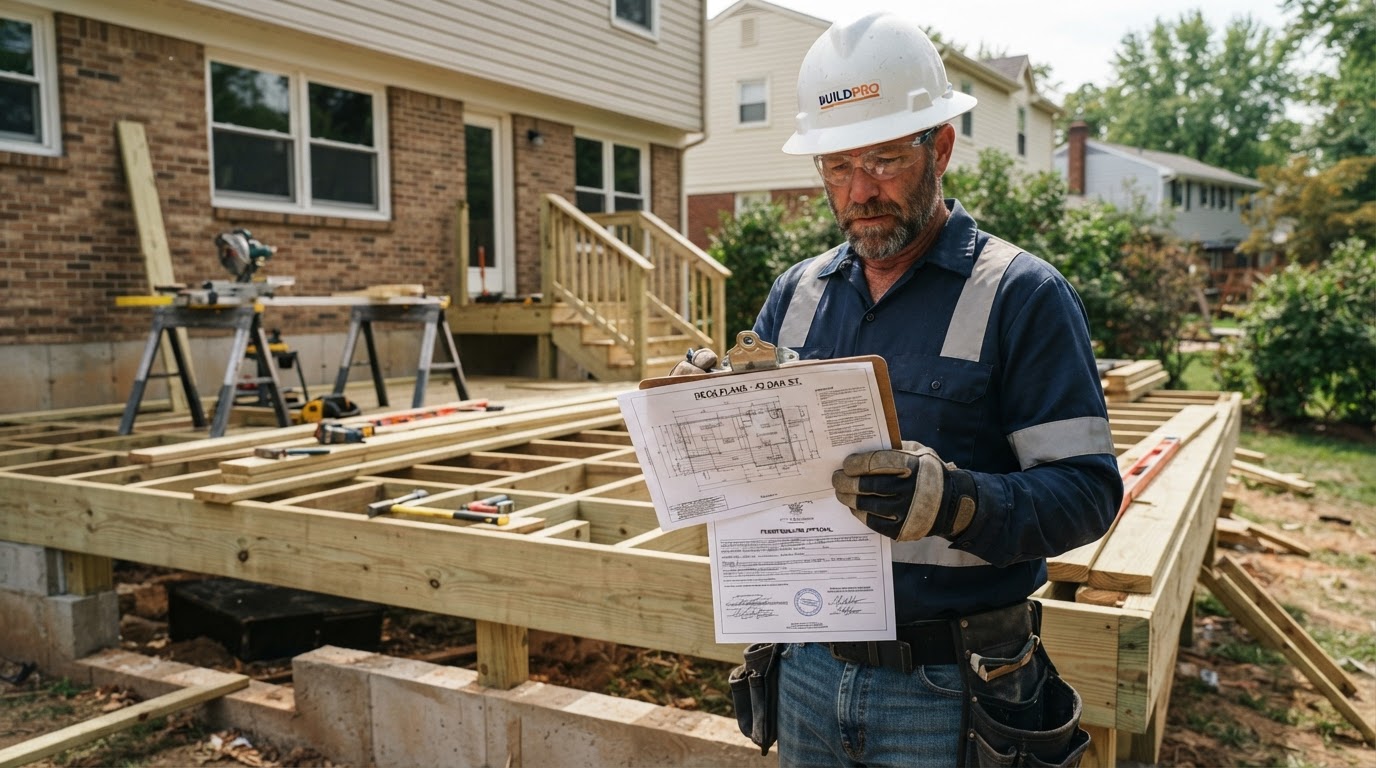
Zoning is a separate hurdle: setbacks, lot coverage, and height limits are zoning rules that vary by location. Most towns follow a similar inspection path: footing and framing inspections, then a final inspection and Certificate of Completion. One local guide estimates about two weeks for a standard permit and about three for covered or larger decks.
A good builder explains all of this without being asked. If one tells you a permit isn't needed before seeing your yard, that's a red flag.
Step 3: Choose Your Material
Long Island is tough on decks: humid summers, freezing winters, and salt in the air near the water. Installed prices from the Long Island estimate run about $25 to $30 per square foot for pressure-treated pine, $42 to $48 for cedar, and $49 to $52 for composite.
Material | Upfront cost | Upkeep | Best for
- Pressure-treated pine | Lowest | Regular cleaning and sealing or staining | Tight budgets
- Cedar | Mid to high | Sealing to hold its color | A warm, natural look
- Hardwoods like Ipe | High | Optional oiling to keep color | Premium wood look
- Composite / PVC (Trex, TimberTech) | Highest | Soap and water, no staining | Low maintenance
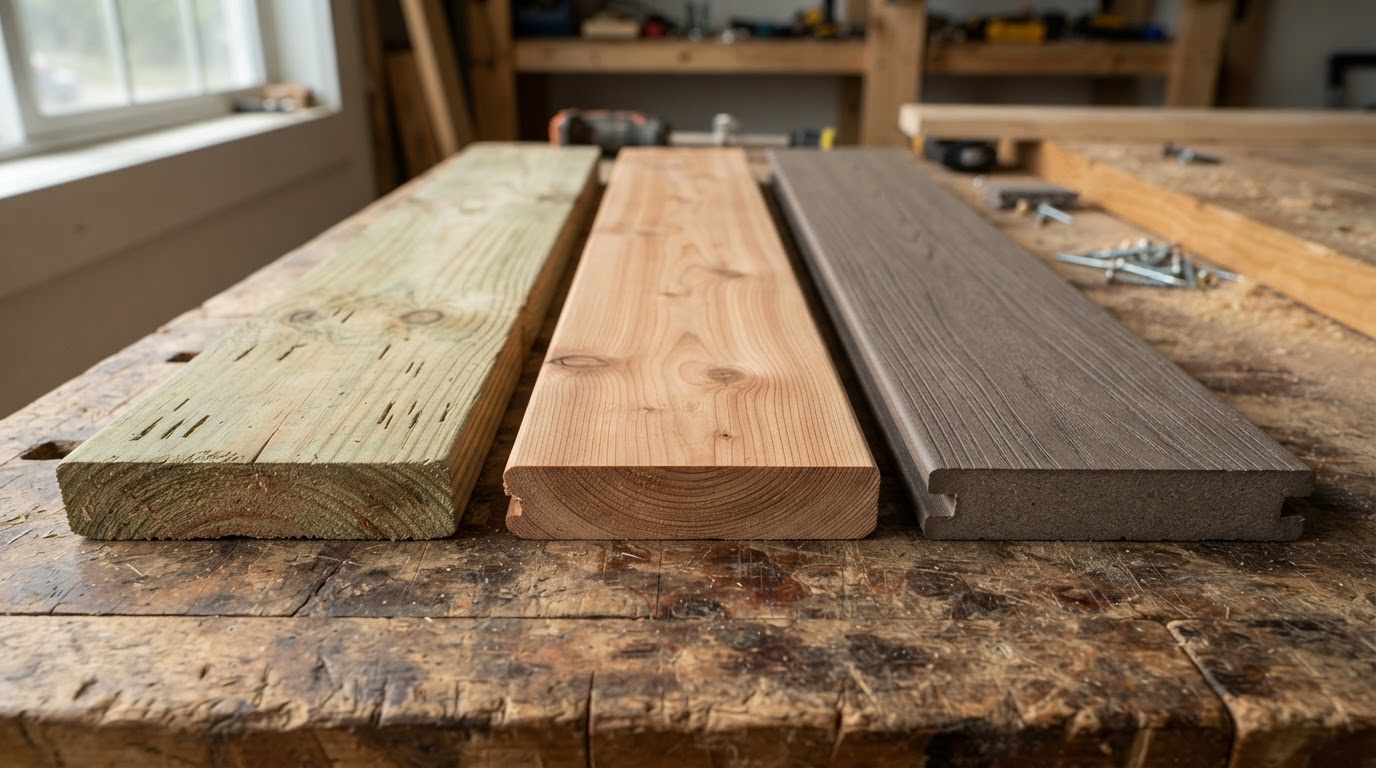
Pine costs less now, while composite costs less over time in weekends and sealant. A builder worth hiring explains these trade-offs honestly instead of pushing whatever's easiest for them.
Step 4: Verify the License and Insurance
This step protects you more than any other. Running a home improvement business in Nassau County without a license is against the law, and the Office of Consumer Affairs can confirm a contractor's license and complaint history at 516-571-2600.
Insurance matters just as much. Licensed contractors must provide certificates of liability and property damage coverage, plus workers' compensation for their employees. Ask to see the certificates yourself. Also ask about the crew: subcontractors, other than plumbers and electricians, must hold a valid county license too. Whoever you hire, including us, should hand these over without hesitation.
Step 5: Check Reviews, Portfolio, and Local Experience
Credentials tell you a builder is legal. Reviews and past work tell you whether they're good.
Read reviews for patterns. Look past the star rating. Do customers mention clear communication, clean job sites, and finishing on schedule? Notice how the company responds to complaints.
Ask for local examples. A builder who has worked in Valley Stream and across Nassau County already knows the permit offices, soil, and lot layouts. Ask for addresses or photos of completed decks nearby.
Look at the details. In photos, check railing alignment, stair consistency, and how cleanly boards meet at corners. Details reveal craftsmanship.
At Dougy Construction, we're proud of our 5-star record across verified customer reviews, and we encourage you to read them and compare us to anyone else on your list.
Step 6: Compare Itemized Estimates
Get at least two or three written estimates, and compare what's included, not just the total. Ask each builder:
- What's your county license number, and can I see your insurance certificates?
- Who pulls the permit and schedules inspections?
- Is the estimate itemized, with materials and brands named?
- What's the payment schedule, and what does the warranty cover?
- Who will be on my property: employees or subcontractors?
A much lower price often means something was left out, like permits, footings, or flashing. One more protection: New York law gives you three days to cancel a home improvement contract, and the cancellation must be in writing.
Step 7: Understand the Timeline
A solid builder gives you a written schedule in four phases:
- 1**Design and planning**: site visit, measurements, 3D custom design, and engineering drawings.
- 2**Permit and approval**: plans submitted to your town, with corrections handled for you.
- 3**Construction**: excavation and footings, framing, decking, railings, stairs, and lighting.
- 4**Final inspection and walkthrough**: the town signs off, then we walk the finished deck with you.
Once permits are in hand, construction is usually the quickest phase. Most of the waiting happens during approvals.
Frequently Asked Questions
How much does it cost to build a deck on Long Island?
Local estimates start around $25 per square foot for pressure-treated pine and climb toward $50 or more for composite, with custom features adding to the total.
Do I need a permit for a deck in Nassau County?
Most decks do, especially attached, elevated, covered, or larger ones. Your town or village building department makes the final call.
How do I know if a deck builder is licensed?
Call the Nassau County Office of Consumer Affairs at 516-571-2600 and ask for the license number and complaint history.
Ready to Find the Right Builder?
The best deck building company is the one that answers your questions plainly, shows you real credentials, and gives you an honest, itemized number. Learn more about our custom deck installation in Valley Stream, or request a free estimate and we'll walk your yard with you.
Call (631) 839-6476. Dougy Construction, 13 E Maple St, Valley Stream, NY 11580.
Ready to start your project?
Get a free estimate from Dougy Construction — NYC's trusted deck, fence, and renovation specialists.