Valley Stream Deck Builders: Custom Backyard Decks & Permitting Guide
Planning a custom deck in Valley Stream, NY? Compare materials, understand permit requirements, and learn how to choose the right local deck builder for your backyard.
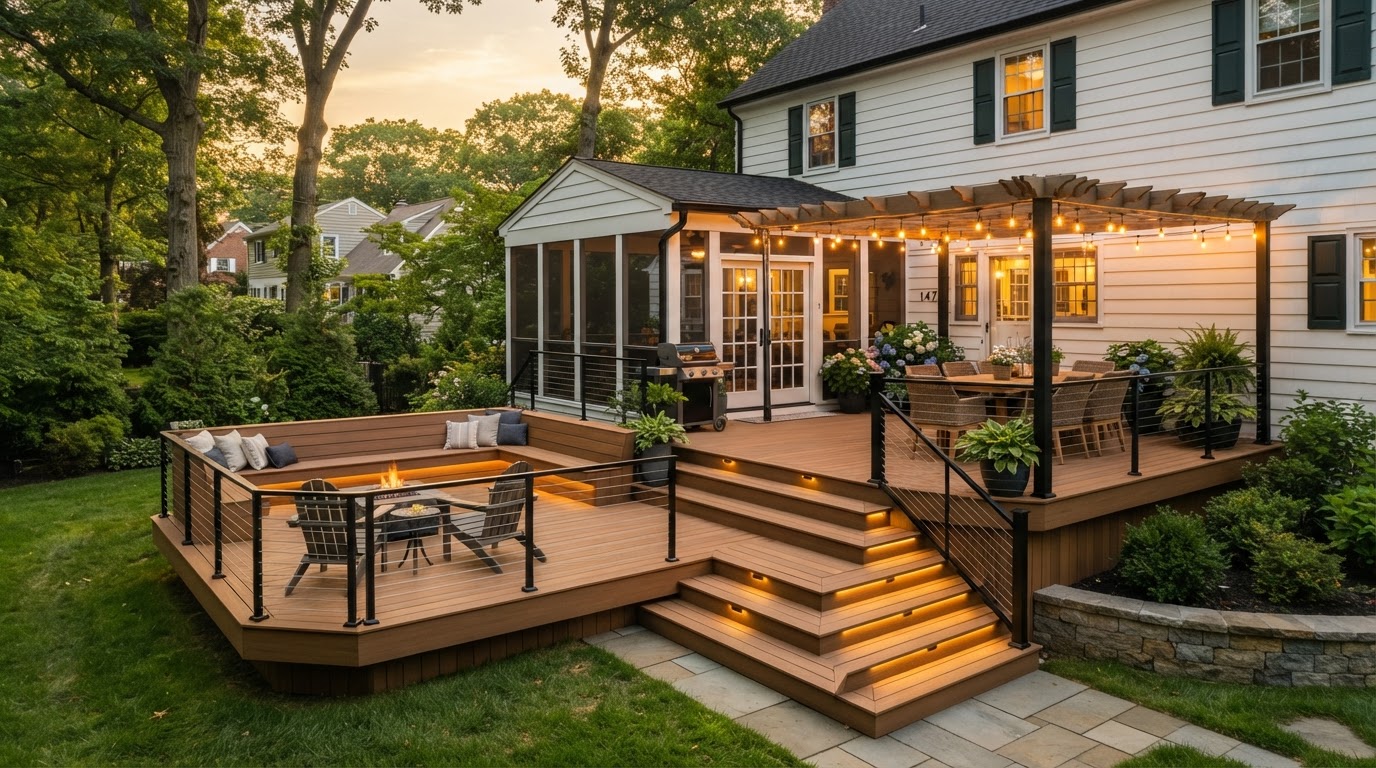
A backyard deck is one of the most rewarding upgrades a Valley Stream homeowner can make. It turns an underused patch of grass into a place for morning coffee, weekend barbecues, family dinners, and quiet evenings under the stars. But a deck is also a structure, which means it has to be designed well, built to last, and approved by the right people before the first board goes down. That is where experienced valley stream deck builders earn their keep.
If you have been researching deck contractors in the area, you already know the options run wide. Some companies specialize in quick, standard installs. Others take the time to design around your yard, your home, and the way your family actually plans to use the space. This guide walks through everything that goes into a custom deck project in Valley Stream, from choosing a reliable contractor to understanding permits, materials, costs, and the construction process itself. By the end, you will have a clear picture of what to ask, what to expect, and how to avoid the mistakes that turn a dream backyard into a stressful project.
Why Hire Professional Valley Stream Deck Builders
Building a deck looks straightforward from the outside. Measure the yard, set some posts, frame it, lay the boards, and add a railing. In practice, a deck is a connected structural system that has to handle weight, weather, and years of daily use without failing. A professional valley stream deck contractor understands how each piece, the footings, ledger, joists, beams, hardware, and surface, works together to carry load safely from the deck into the ground or the house.
Hiring a professional also means you get someone who knows the local landscape. Valley Stream homes range from center-hall colonials and brick Cape Cods to split-levels and newer builds, and each presents different access, grading, and setback considerations. A builder who works in the area regularly has seen the common challenges and can plan around them before they become expensive problems. They also understand which permits apply, which inspections get scheduled, and how to keep your project compliant with the codes that govern your specific property.
Beyond structure and compliance, a skilled builder helps you get more out of the space. Good design is not about adding every feature in a catalog. It is about matching the deck to how you live, whether that means a compact reading nook, a large entertaining platform, or a multi-level layout that follows the slope of your yard. The right builder asks about your goals first and lets the design follow from there.
How to Choose a Reliable Valley Stream Deck Contractor
Not every contractor who builds decks is the right fit for your project. The differences usually show up in communication, documentation, and the quality of the finished details. Here are the things worth checking before you sign anything.
Verify Licensing and Insurance
Before anything else, confirm that the contractor is licensed and insured to perform home improvement work in your area. Ask for proof of general liability insurance and workers' compensation coverage, and do not settle for a verbal assurance. A reputable builder hands over documentation without hesitation because they know it protects both you and them. Insurance matters more than most homeowners realize. If a worker is injured on your property or your home is damaged during construction, proper coverage keeps you from carrying that liability yourself.
Review Past Projects and Local References
Photos tell you what a builder can do. Local references tell you what it is actually like to work with them. Ask for examples of decks completed in Valley Stream or nearby Long Island communities, and request contact information for a couple of recent clients. When you speak with those homeowners, ask whether the crew showed up on time, kept the site clean, communicated clearly, and delivered what was promised. A contractor with a strong local reputation will be glad to connect you with satisfied customers.
Ask About Communication and Project Management
The number one cause of renovation disputes is not bad craftsmanship. It is poor communication. Ask who your day-to-day contact will be, how often you will receive updates, and how changes or unexpected issues get documented and approved. A contractor who communicates well during the quoting phase is usually a preview of how they will communicate once construction starts. You should never have to chase someone down to learn what is happening in your own backyard.
Popular Custom Deck Designs for Valley Stream Backyards
Every yard is different, and a good custom deck design respects that. The layout that works for a flat, open lot is not the same one that suits a narrow property with mature trees or a sloped grade. Here are some of the design approaches that tend to work well for valley stream homeowners.
Ground-Level Platform Decks
For smaller or flatter yards, a simple ground-level platform keeps the project affordable while still creating a defined outdoor room. These decks are low to the ground, often do not require railings depending on height, and work beautifully as a spot for a small table, a grill, and a couple of chairs. They are a smart choice when the goal is a comfortable, low-profile space rather than a dramatic focal point.
Multi-Level Decks for Sloped or Tiered Yards
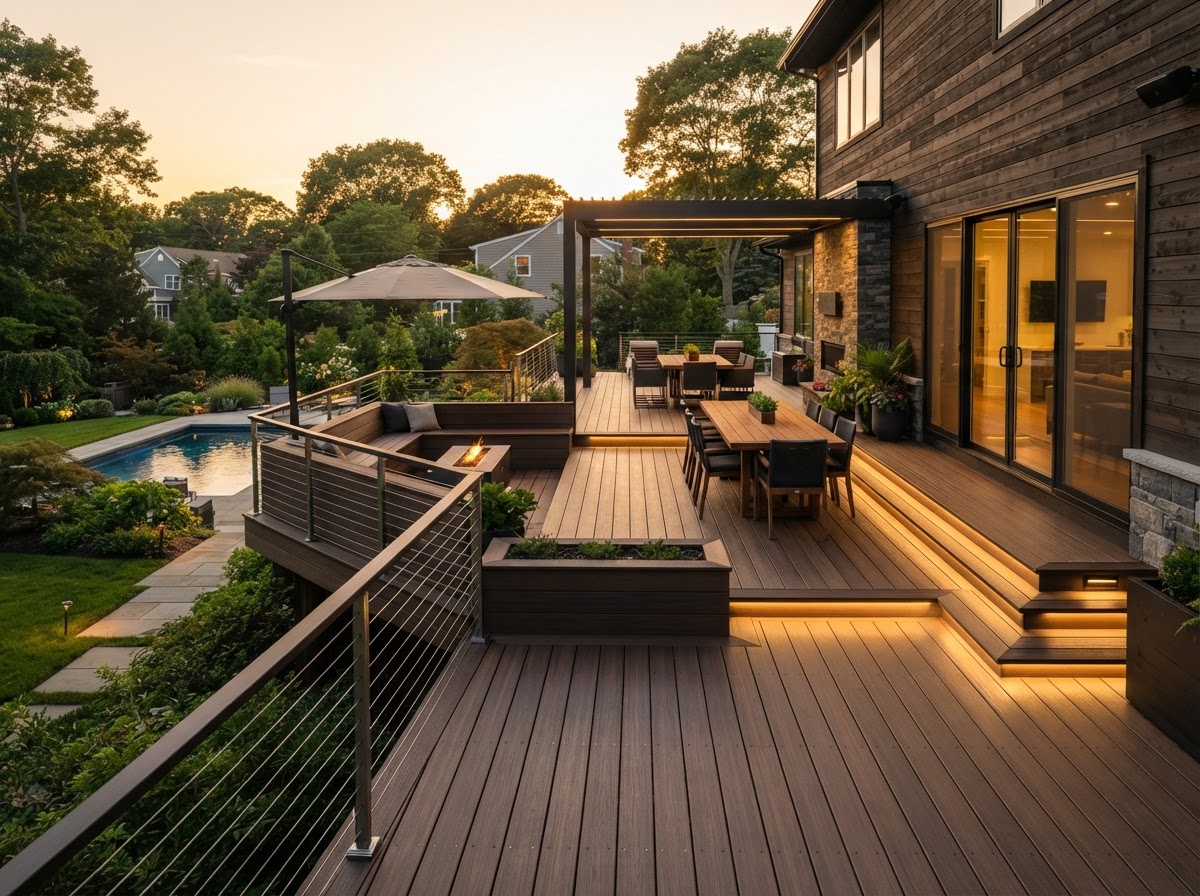
When a yard has elevation changes, a multi-level deck can turn a tricky slope into one of the most interesting parts of the property. Each level can serve a different purpose, a dining zone on the upper deck, a lounge area a few steps down, and a connection to the yard below. Multi-level designs require more planning and structural work, but they make excellent use of space that a single-level deck would waste.
Wraparound Decks and Entertaining Platforms
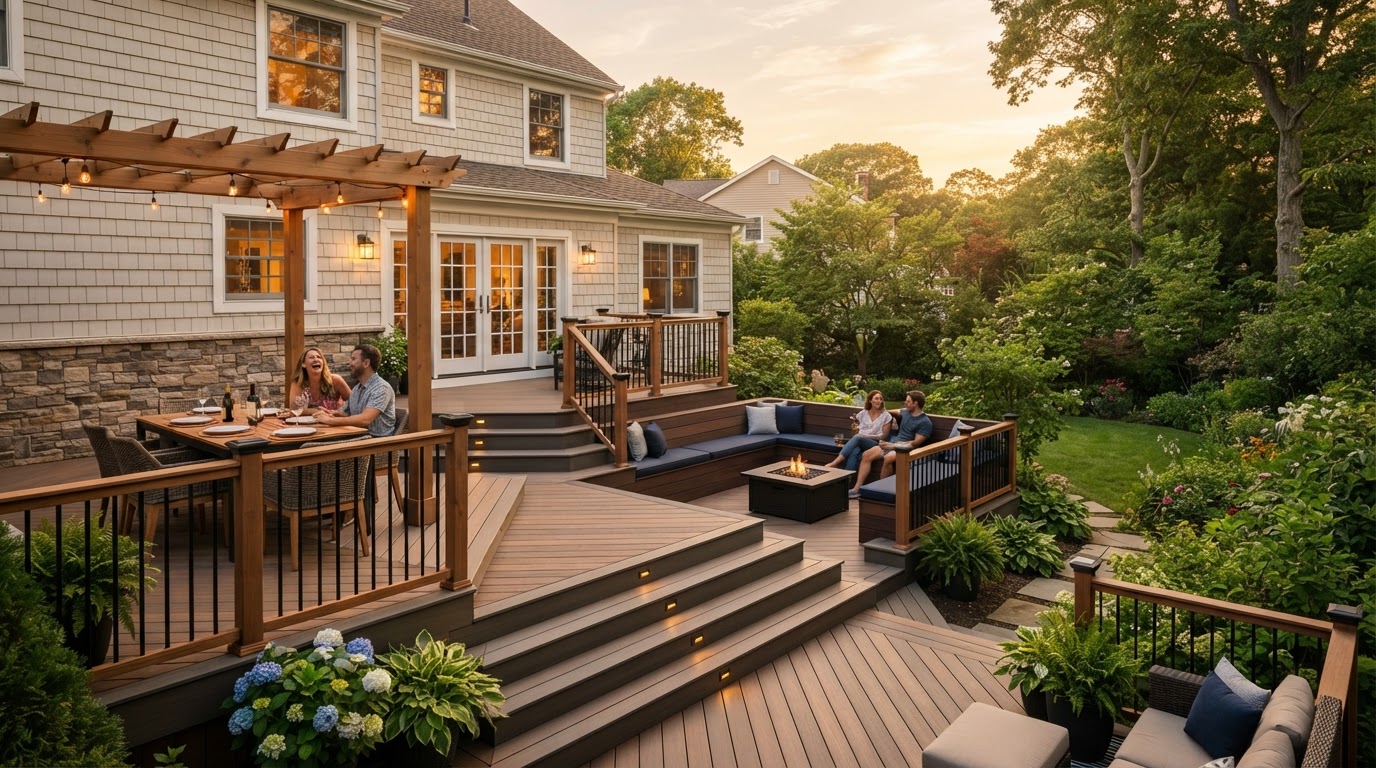
For homeowners who love to host, a larger wraparound or entertaining platform extends the living area of the home outdoors. These decks often include built-in seating, space for a dining table, and sometimes an outdoor kitchen or bar area. The key is sizing the deck to the yard and the home, not building the largest deck the lot can hold. A deck that overwhelms the backyard feels cramped rather than inviting.
Comparing Decking Materials: Wood, Cedar, Composite, and PVC
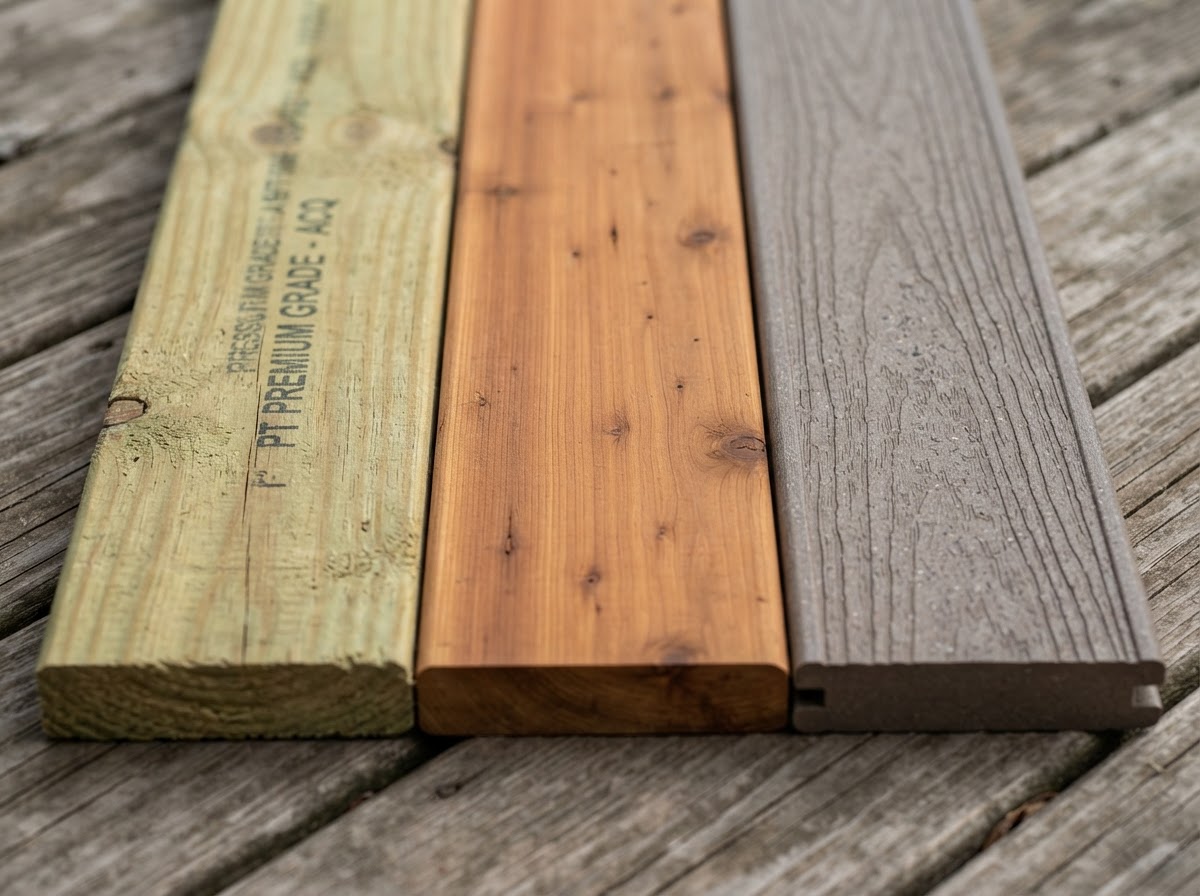
Material choice shapes the look, feel, maintenance, and cost of your deck more than almost any other decision. There is no single best option. There is the best option for your budget, your tolerance for upkeep, and the conditions in your yard. A knowledgeable deck builder walks you through the trade-offs honestly instead of pushing whatever is easiest to source.
Pressure-Treated Wood
Pressure-treated lumber is the most budget-friendly decking material and a workhorse choice for Long Island homes. It holds up well when properly sealed and maintained, and it can be stained to match a range of styles. The trade-off is upkeep. Pressure-treated wood needs periodic cleaning, staining, and sealing to protect against moisture, sun, and the freeze-thaw cycles that define Valley Stream winters. Without that care, boards can fade, split, and warp over time.
Cedar Decking
Cedar offers a warm, natural appearance and a distinctive grain that many homeowners love. It resists insects and decay naturally, which makes it a popular mid-range option. Cedar still requires maintenance to hold its color and integrity, and it tends to cost more than pressure-treated pine. For homeowners who want the look of real wood and are willing to invest in upkeep, cedar is a beautiful choice.
Composite Decking
Composite decking is made from a blend of wood fibers and plastic, and it has become increasingly popular with homeowners who want the look of wood without the annual maintenance. It resists rotting, fading, and splintering, and it needs only occasional cleaning with soap and water. The trade-off is a higher upfront material cost. Over the long term, many homeowners find that the reduced maintenance pays for itself, especially in a climate like Long Island's where weather exposure is constant.
PVC Decking
PVC decking is fully synthetic, which makes it the most moisture-resistant option available. It will not rot, and it stands up well to humidity, rain, and snow. PVC is typically the most expensive decking material, but it offers the lowest maintenance burden and a long lifespan. It is worth considering if your deck will see heavy exposure to the elements or if you want a surface that stays looking new with minimal effort.
Deck Building Permits in Valley Stream
Most deck projects in Valley Stream require a building permit, particularly when the deck is attached to the home or elevated above a certain height. Permitting is not a formality. It is the process that confirms your deck is designed to meet local structural and safety standards, and skipping it can create real problems down the road, from fines and stop-work orders to complications when you sell your home.
What the Permit Process Typically Involves
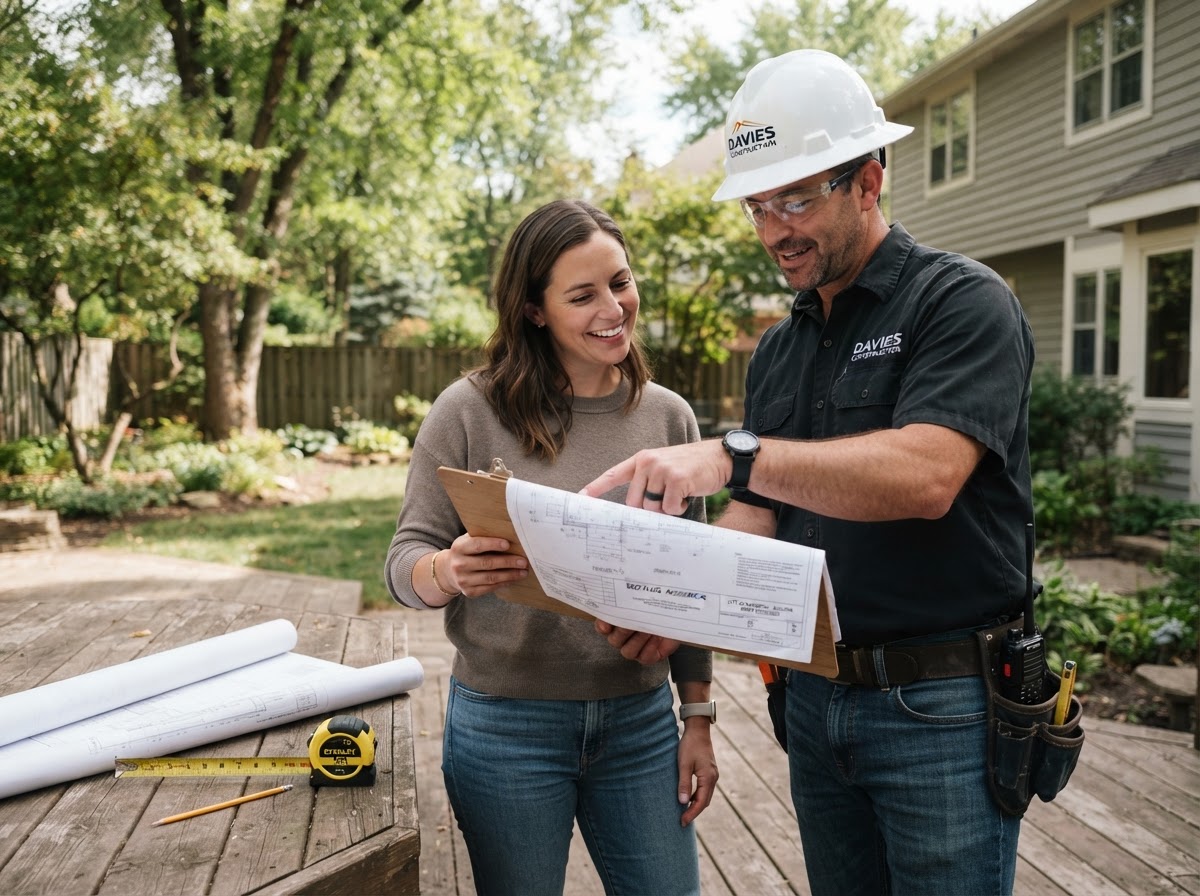
A permit application generally includes scaled drawings showing the deck's dimensions, footing locations, framing details, railing heights, and stair layout. The building department reviews the plans for code compliance, and once approved, inspections are scheduled at key stages of construction. Footing inspections happen before concrete is poured. Framing inspections happen once the structural elements are in place. A final inspection confirms the completed deck meets code before it is cleared for use.
Zoning, Setbacks, and Property Lines
Beyond the building permit, zoning rules govern where on your property a deck can sit. Setback requirements determine how close the deck can be to property lines, and lot coverage rules may limit the total footprint of structures on the property. Height restrictions can also apply, especially for elevated decks. Because these rules vary by municipality and even by property, the safest approach is to confirm the requirements that apply to your specific address before finalizing a design.
Who Handles the Paperwork
A reliable valley stream deck contractor handles permitting as part of the project. They prepare the drawings, submit the application, pay the fees, and coordinate inspections. If a contractor tells you a permit is unnecessary before they have seen your yard and reviewed the project scope, that is worth a follow-up question. Permitting requirements depend on the specifics of the build, and a professional builder explains that clearly rather than brushing it aside.
Factors That Affect Custom Deck Construction Costs
Deck pricing varies more than most homeowners expect, and understanding the variables helps you read any estimate with confidence. The main cost drivers include the size and shape of the deck, the materials you select, the height and complexity of the structure, site conditions, and any add-ons like railings, stairs, lighting, or built-in features.
A simple rectangular ground-level deck in pressure-treated wood will sit at the lower end of the range. A multi-level composite deck with custom railings, integrated lighting, and built-in seating will sit at the higher end. Labor costs also reflect the complexity of the build. A deck that requires extensive grading, custom framing, or difficult site access takes more time and skill to construct than a straightforward platform.
The most reliable way to understand your project's cost is a detailed, on-site estimate. A phone quote based on square footage alone cannot account for the conditions that actually shape the final number. A trustworthy builder walks your property, measures the space, discusses your goals, and provides an itemized breakdown you can compare against other proposals.
How to Compare Estimates and Avoid Unexpected Expenses
When you gather estimates, compare the scope, not just the total. Two quotes that look similar on the bottom line can include very different work. Ask whether each estimate covers demolition and disposal, permit fees, railing and stair construction, waterproofing details, and cleanup. Ask whether the materials are specified by brand and product, or listed as allowances that could change once you make selections.
A much lower price often means something was left out. It might be permits, footings, flashing, or the finish work that makes a deck look complete. Rather than choosing the cheapest bid, look at what each contractor actually includes and how clearly they explain it. A transparent, itemized estimate is a sign of a contractor who respects your budget and your time.
Common Deck Construction Mistakes to Avoid
Even a well-intentioned project can go sideways if the fundamentals are not handled right. Here are some of the mistakes that cause the most regret for homeowners.
Skipping the Permit Process
Building without a permit might feel like a shortcut, but it creates risk that far outweighs the time saved. Unpermitted decks can trigger fines, stop-work orders, and requirements to remove or rebuild the structure to code. When it comes time to sell, buyers' attorneys routinely flag unpermitted work, which can delay or derail a sale. The cleanest path is to permit the project properly from the start.
Ignoring Drainage and Site Conditions
Water is the enemy of any outdoor structure. Poor drainage around footings, water pooling against the ledger, or a deck that traps moisture against the house can all lead to rot, settling, and structural failure over time. A good builder evaluates the grade, the soil, and the way water moves across your yard before finalizing the design. Addressing drainage during planning costs far less than repairing water damage after the deck is built.
Choosing Materials Based Only on Price
The cheapest material is not always the most economical choice over the life of the deck. Pressure-treated wood costs less upfront but requires ongoing maintenance. Composite costs more initially but needs almost none. The right choice depends on how much time you want to spend caring for the deck and how long you plan to stay in the home. A builder who explains these trade-offs helps you make a decision you will still be happy with five and ten years down the road.
The Deck Building Process: From Consultation to Final Inspection
A well-run deck project follows a clear sequence. Knowing what to expect at each stage makes the experience smoother and keeps the project on track.
Step 1: Consultation and Design
The process begins with a conversation about your goals, how you use your yard, and what you want the finished deck to feel like. The builder measures the space, evaluates site conditions, and discusses material and layout options. This is where the design takes shape around your home and your lifestyle rather than a generic template.
Step 2: Permitting and Scheduling
Once the design is finalized, the builder prepares the drawings and submits the permit application. Permit review times vary, so it helps to start this step early, especially if you want construction to happen during the busy spring and summer season. While the permit is under review, materials get ordered and the project gets scheduled.
Step 3: Construction
With approvals in place, construction begins. Footings get excavated and set, the frame goes up, the ledger gets attached and flashed, and the decking surface is installed. Railings, stairs, and any built-in features follow. A professional crew keeps the site organized, communicates progress, and protects your property throughout the build.
Step 4: Final Inspection and Walkthrough
After construction, the project moves through any required inspections and a final walkthrough with you. This is your chance to review the finished deck, ask questions about care and maintenance, and confirm that everything meets your expectations before the crew packs up.
Deck Maintenance Tips for Long-Term Performance
A deck is a long-term investment, and a little maintenance goes a long way toward protecting it. For wood decks, plan on periodic cleaning, staining, and sealing to protect against moisture and sun damage. Inspect the structure each season for loose boards, protruding fasteners, or signs of wear around high-traffic areas.
Composite and PVC decks need far less upkeep, but they still benefit from regular cleaning to remove dirt, pollen, and debris. Check that drainage paths stay clear and that nothing is trapping moisture against the framing. No material is truly maintenance-free, but the right choice for your situation can keep upkeep manageable and keep your deck looking good for years.
Frequently Asked Questions
How do I choose the right valley stream deck builders for my project?
Look for a contractor who is licensed and insured, has experience with projects similar to yours, provides detailed written estimates, communicates clearly, and can share local references. Compare what each estimate actually includes rather than focusing only on the total price, and ask how permits and inspections will be handled.
Do I need a permit to build a deck in Valley Stream?
Most attached or elevated decks require a building permit, and the specific requirements depend on the deck's size, height, location, and design. Confirm the requirements with the building department that has jurisdiction over your property before construction begins. A reliable contractor handles the permitting process as part of the project.
How much does a custom deck cost in Valley Stream?
Cost depends on size, materials, design complexity, site conditions, and add-ons like railings, stairs, and lighting. Pressure-treated wood is the most budget-friendly option, while composite and PVC cost more upfront but require less maintenance. The most accurate way to understand your project's cost is a detailed, on-site estimate from a qualified builder.
How long does deck construction take?
Construction time depends on the size and complexity of the deck, material availability, weather, and the permit and inspection schedule. A straightforward deck may take a week or two of active construction, while a larger or more complex project can take longer. Ask your contractor for a realistic timeline based on your specific project.
Is composite decking better than wood?
Neither material is automatically better. Composite requires less maintenance and resists fading and rot, while wood costs less upfront and offers a natural appearance. The right choice depends on your budget, maintenance preferences, and how you plan to use the space. A good builder helps you weigh the trade-offs honestly.
Start Planning Your Valley Stream Deck
A custom deck should be designed around your home, your yard, and the way your family actually lives. The right builder helps you balance appearance, function, budget, and code compliance so the finished space feels like a natural extension of your house rather than an afterthought. For more detailed planning guidance, review our Valley Stream deck builders guide for a deeper look at materials, design considerations, and the permitting process.
When you are ready to move forward, request a free estimate or call Dougy Construction directly at (631) 839-6476. We will walk your property, listen to your goals, and provide a clear, itemized proposal with no obligation. Your backyard has more potential than you might realize, and the right deck is the first step toward making the most of it.
Ready to start your project?
Get a free estimate from Dougy Construction — NYC's trusted deck, fence, and renovation specialists.