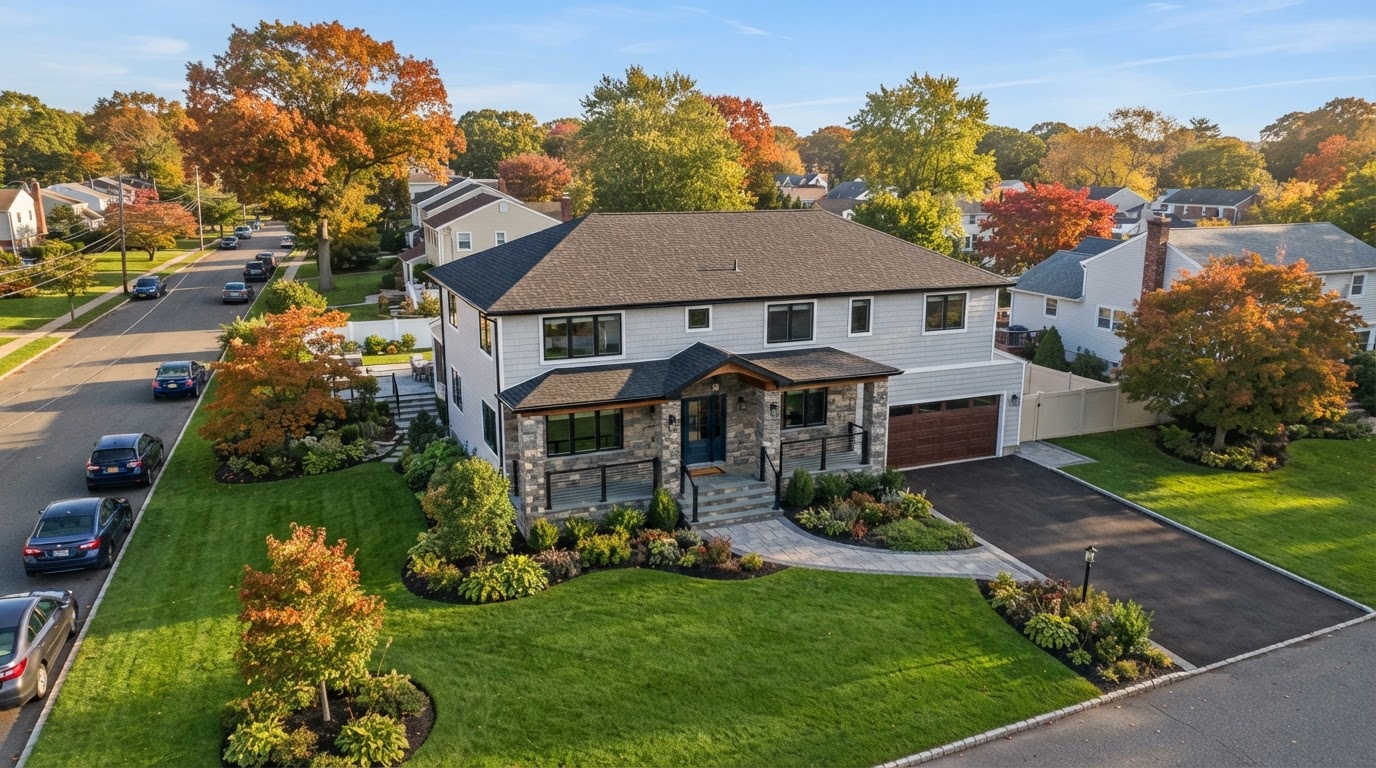
Long Island Gut Renovation Costs | Dougy Construction
Buying a 1940s–1960s home in Valley Stream, Elmont, or Lynbrook? See what drives whole house renovation cost on Long Island and what to check before you close.
Meta title: Whole House Renovation Cost on Long Island: Fixer-Upper Guide
Meta description: Buying a 1940s–1960s home in Valley Stream, Elmont, or Lynbrook? See what drives whole house renovation cost on Long Island and what to check before you close.
# Whole House Renovation Cost on Long Island: Fixer-Upper and Estate Sale Gut Renovation Guide
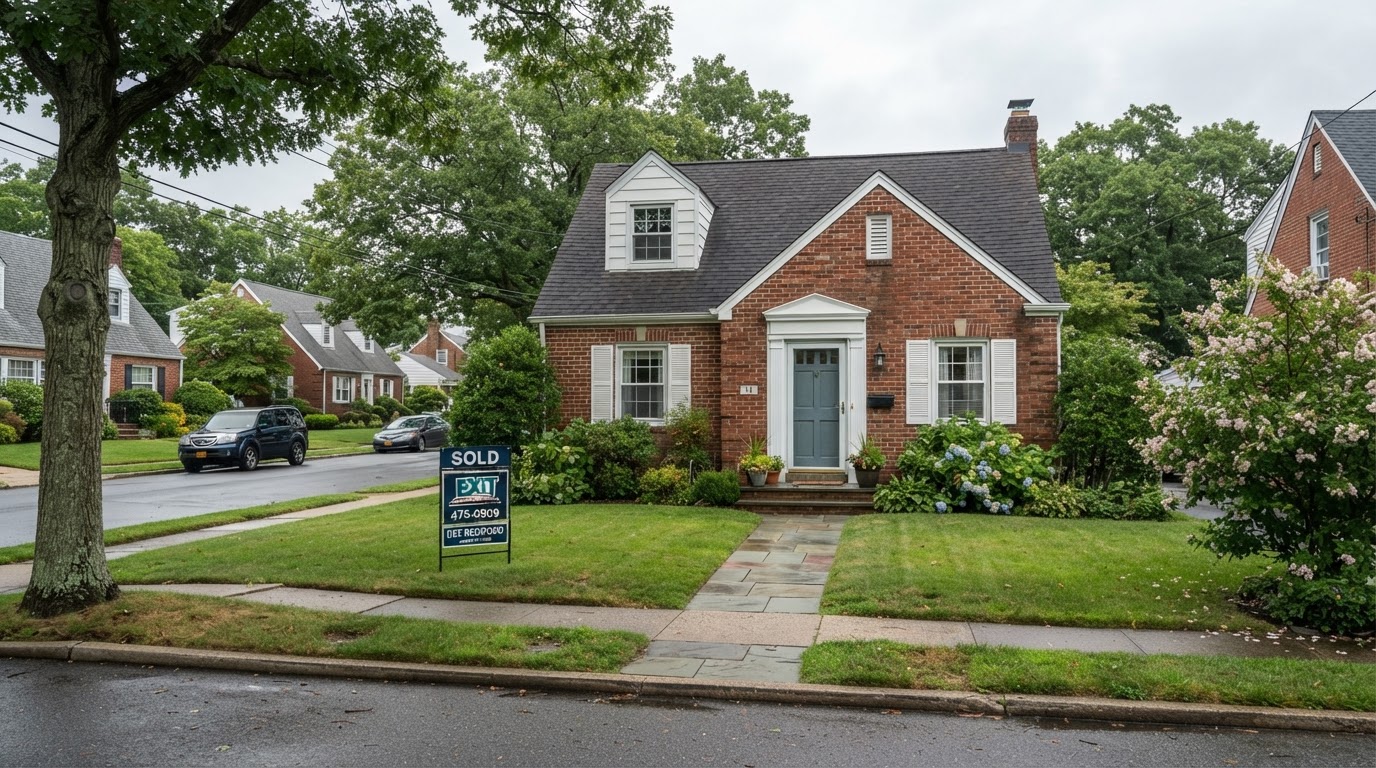
A buyer walks through a tired 1950s Cape in Valley Stream, Elmont, or Lynbrook and sees the potential right away. The price is lower than a renovated home down the block, the lot is good, and the bones look solid. Then closing happens, the walls come open, and the real budget shows up.
Estate sales and fixer-uppers can be a smart way into the Nassau County market. They can also turn expensive fast if you buy without a plan. This guide explains what drives whole house renovation cost on Long Island, what hides behind the walls of mid-century homes, and why talking to a gut renovation contractor in Nassau County before you close can protect your money.
What Does a Whole House Renovation Cost on Long Island?
It's the first question every buyer asks, and the honest answer is that it depends. Still, you need a starting point.
One published Long Island benchmark from Sweeten puts full-home renovations at a starting point of about $100 per square foot with stock materials, while high-end properties start at $250 or more per square foot.
To show how that scales, here is a simple illustration. A 1,500-square-foot ranch at $100 per square foot would come to $150,000, and at $250 per square foot it would come to $375,000. That is a wide gap, which is exactly the point. Your final number depends on the home and the choices you make.
Keep in mind that this benchmark is a general guide from 2024, so current pricing may be higher. A true gut renovation of a house that has gone decades without updates — one that needs structural work, new systems, and possibly abatement — will likely sit above the entry-level figure. Only an inspection and a written estimate can tell you where your house lands.
When comparing the average cost of a whole house renovation across sources, remember that national averages rarely reflect Long Island labor, permit, and material costs.
What Drives Renovation Cost the Most
Rather than chase a single figure, look at the categories that move the budget:
- Demolition and debris removal
- Structural repairs
- Electrical and plumbing replacement
- HVAC and insulation
- Windows, roofing, and exterior work
- Kitchens and bathrooms
- Flooring, paint, and finishes
- Permits and inspections
- A contingency reserve for what you can't see yet
The last item matters most. Older homes reveal surprises once demolition begins, so set aside a reserve before work starts.
Why 1940s–1960s Homes Need More Than Cosmetic Updates
Much of the housing in Valley Stream, Elmont, and Lynbrook went up in the post-war decades. These homes were built quickly and sensibly for their time, but building codes, materials, and expectations have changed since.
Estate sales add another layer. A house lived in by one owner for forty or fifty years often has systems that were never upgraded. The kitchen may be original, the electrical panel may have been added to rather than replaced, and the bathroom may not have been touched in decades.
None of that makes the house a bad buy. It means you should price the home based on what it takes to make it safe and livable, not just on the listing price.
What "Gut Renovation" Actually Means
A gut renovation strips the interior down to the structural framing. Walls, ceilings, flooring, and outdated systems come out, and then everything is rebuilt with new framing where needed, new insulation, new mechanical systems, and new finishes.
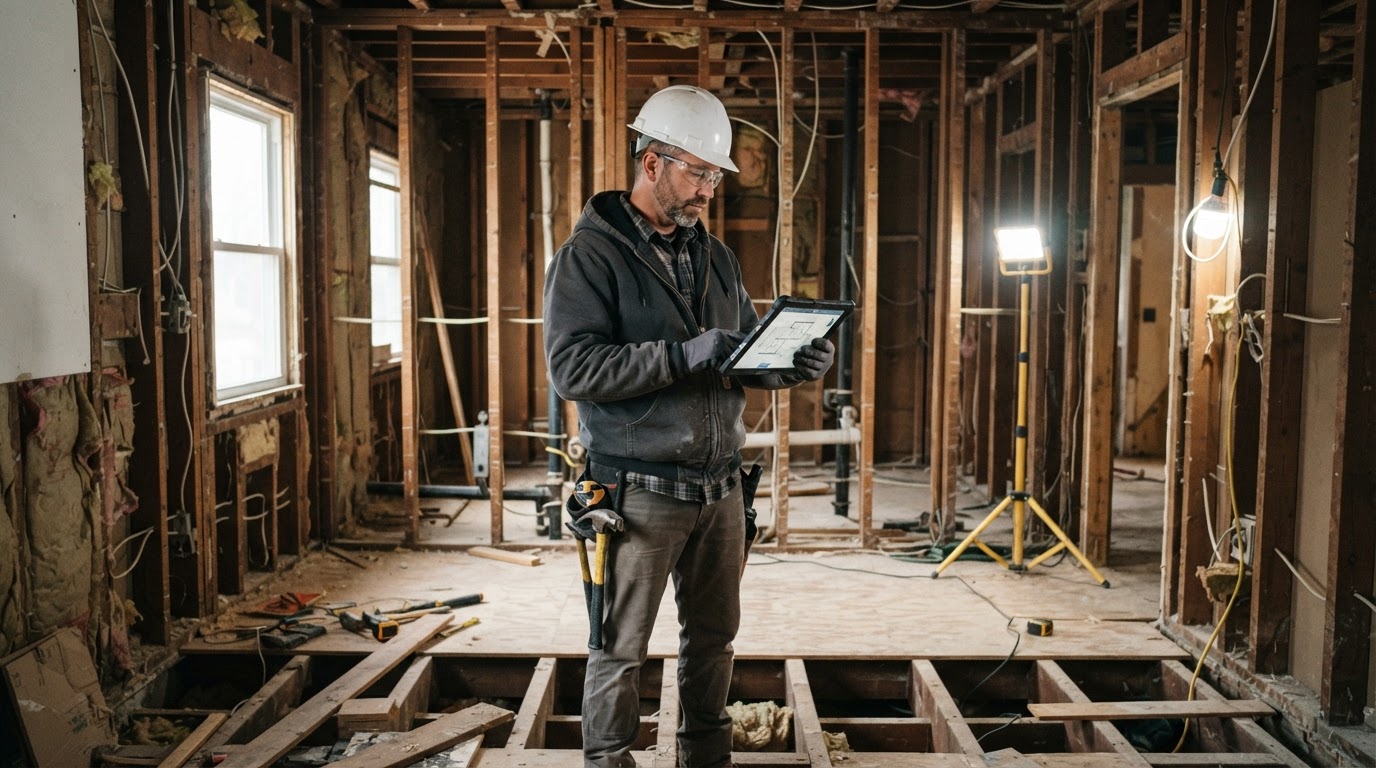
That is different from a remodel, where you update surfaces and fixtures and work around what is already there. Because nobody is living in the house yet, buyers can do the work faster and with less disruption. To see how this process runs from demolition through final finishes, look at a dedicated service for complete gut home remodeling in Valley Stream, NY.
The Big Three: Structure, Electrical, and Plumbing
Structure
Older homes settle, and water finds its way in. A contractor should check floor joists, sill plates, rafters, and any past additions. Look for sagging floors, cracked foundation walls, and old water damage. Some fixes are minor. Others, like sistering joists or replacing a rotted sill, add real cost and time.
Layout matters too. Many homes from this era have small, closed-off rooms, and buyers often want an open kitchen and living area. Whether a wall is load-bearing changes the scope, so get that answer before you finalize a design.
Electrical
This is where many fixer-upper budgets get blown. Older homes may have knob-and-tube wiring, cloth-sheathed cable, ungrounded outlets, or undersized panels that can't handle modern loads like induction ranges, EV chargers, and mini-splits.
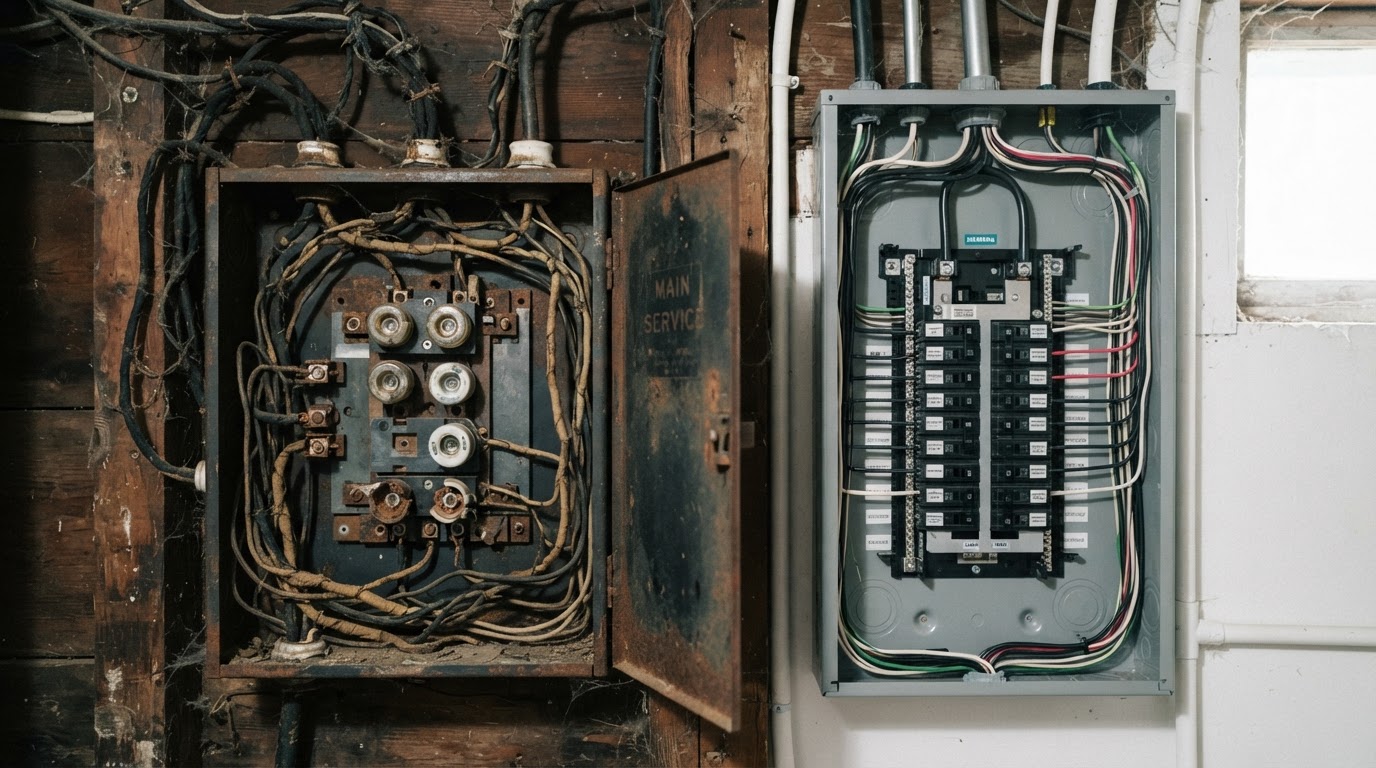
Rewiring and replumbing older homes on Long Island is far easier while the walls are already open. Running new circuits and adding a larger panel costs a fraction of the hassle compared with fishing wires through finished plaster.
Plumbing
Many mid-century homes still have galvanized steel supply lines that corrode from the inside and restrict flow. Drain lines are often cast iron, which can crack, rust through, or clog over time. Replacing them, along with the main water service if needed, protects you from leaks and water damage later.
Bathrooms deserve special attention. When gutting older bathrooms to the studs, you will often find aged cast iron drains, subfloor rot around the tub or toilet, and outdated waterproofing. Fix these properly now instead of tiling over a problem.
Hazards to Check Before You Close
Houses built before the late 1970s may contain regulated materials. Lead paint is common in homes of this age. Asbestos can show up in floor tiles, pipe insulation, older siding, and some ceiling and wall materials. Estate-sale homes that have never been renovated are more likely to still have them.
This is not a reason to panic, but it is a reason to test. Disturbing these materials without proper handling can spread dust through the house and create health risks and legal problems. If testing confirms their presence, you will need a licensed asbestos and lead abatement contractor in Nassau County to handle removal before demolition begins. Build that into your timeline and budget from the start, since abatement can add days or weeks.
Phased Renovation vs. Full Gut Remodel
Another common question is whether to renovate in phases or do everything at once. A phased renovation timeline vs. full gut remodel comparison comes down to budget, tolerance for disruption, and what the house actually needs.
**Phased approach.** You tackle urgent items first, like electrical, plumbing, and safety, then do kitchens, baths, and finishes later. Cash flow is easier to manage, but you may open and repair the same walls more than once, and living in a construction zone wears on people.
**Full gut approach.** Everything is done in one coordinated project before you move in. Trades work in sequence without tearing apart finished work, which is usually more efficient and gives you a consistent result. The tradeoff is a larger upfront investment and a longer wait before move-in.
If the house needs major systems work throughout, a full gut often makes more sense than a series of partial projects.
How to Choose the Right Contractor
Not every contractor is set up for whole-house work. You want a team that handles permits, coordinates trades, and communicates clearly. Gaps in scope or schedule are where costs creep up.
When comparing proposals, look beyond the bottom line. Line items should be clear, allowances explained, and exclusions spelled out. This guide on vetting contractor bids for extensive home renovations shows what to look for in a proposal and how to build a contingency budget that holds up.
A few questions to ask any contractor:
- Are you licensed and insured for work in Nassau County?
- Who pulls permits and handles inspections?
- How do you handle change orders?
- Who is on site day to day?
- Can you share references from similar projects?
Why a Pre-Purchase Walkthrough Pays for Itself

Talk to a contractor before you close, not after. A walkthrough gives you a realistic view of what the house needs. A contractor can spot sagging framing, signs of water intrusion, outdated panels, and possible hazardous materials. That helps you decide whether the asking price makes sense, whether to negotiate, and whether to walk away.
It also lets you plan financing, permits, and a realistic schedule before you take ownership. For estate sales, which are often sold as-is, this step matters even more. Sellers may not know about hidden issues, and you usually have less room to negotiate repairs afterward.
Plan Your Long Island Gut Renovation with Dougy Construction
A fixer-upper in Valley Stream, Elmont, or Lynbrook can be a smart investment when you go in with eyes open. A thorough gut renovation can turn a tired house into a modern, efficient, safe home. The key is information: know what is behind the walls, plan for hazards, budget with room for surprises, and choose a contractor who can manage the whole job.
Ready to see what a house really needs before you commit? Dougy Construction offers a pre-purchase walkthrough and project-specific estimate for buyers across Nassau County. **Schedule a Pre-Purchase Contractor Walkthrough & Renovation Estimate** or call (631) 839-6476 to get started.
Dougy Construction · 13 E Maple St, Valley Stream, NY 11580 · (631) 839-6476
Ready to start your project?
Get a free estimate from Dougy Construction — NYC's trusted deck, fence, and renovation specialists.